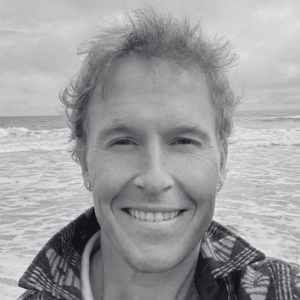

Amber Pepper, the new CEO of the Natural Diamond Council (NDC), was supposed to meet the trade at an event in New York City last week, but she couldn’t make it after getting stuck in Dubai. (She’s since returned home to London.) However, she did give her first interview as CEO to JCK—on the same day the NDC announced it was supporting World Diamond Day.
Here, the former chief marketing officer for Mytheresa discusses her plans for the Natural Diamond Council and the very important topic of its funding.
Do you want to introduce yourself and talk about how you got to the NDC?
My background has been entirely focused on the consumer. When you look at my résumé, I’ve worked across many different brands, mainly luxury brands, across fashion, across retail, across beauty.
[What] fascinates me is what makes the consumer tick—really getting under the skin and understanding who your target consumer is, how they’ve evolved, how the needs and values you have as an organization relate to the needs and values of your consumer, and how you create an authentic dialogue.
That authenticity is where you have to dig hard in fashion and retail, to make sure it’s really there. And for me, natural diamonds are completely about authenticity, and authenticity over and above imitation—which is where the synthetic conversation comes into the mix. Authenticity is something that I’m very passionate about because it’s what consumers are passionate about. We all want that transparency, we want to understand what we’re buying into and why, and if we share the same values.
What are your plans for the Natural Diamond Council?
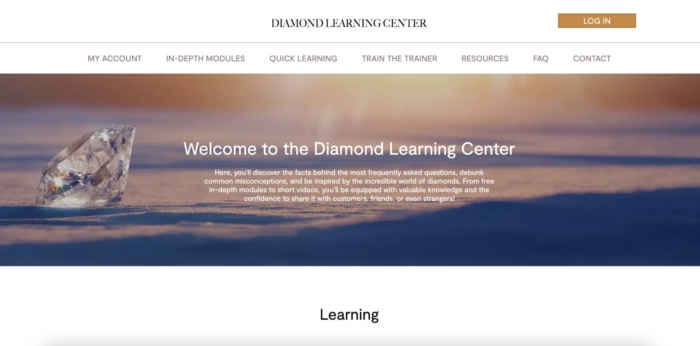
The NDC has done an enormous job over the last few years with very challenged budgets in a really tough market. There have been some areas that have been really important, around helping educate the consumer with different programs, like the Diamond Learning Center and the Premier Retailer program, and creating some strong and important content. There is an opportunity to dig into that and escalate programs where we see real green shoots. While we don’t share too much about our budgets, we have had a significant increase from last year. We have an opportunity to scale those programs in a way that we didn’t previously.
The other big piece is looking at the content platforms we have and thinking about how we’re creating and sharing content. [Marketing] used to be about top-down campaigns. Now, it’s about trying to create a real dialogue and getting to know consumers and having them to take ownership. There is an opportunity, with the richness of the storytelling that we have, to make sure we get the cut-through in the right way.
We’ve got some great projects already underway. A lot is going to be coming out. We want to ultimately drive desire by being part of the conversation. You do that by putting out the right content.
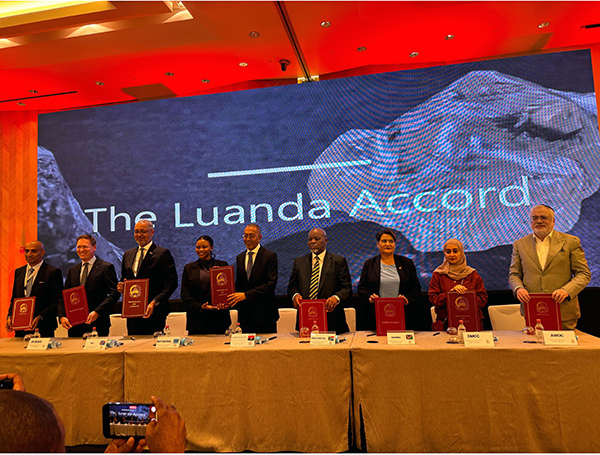
Can you explain what’s happening with funding? Is the Luanda Accord [an agreement by diamond-producing countries and other industry groups to support the NDC] still happening?
We had our Luanda Accord 2.0 meeting in February, my first week of joining [the NDC], which was actually crazy but brilliant timing. I had to chance to really connect and hear everybody’s thoughts. The most important outcome of that conversation was that Namibia signed up.
We want to get to a point where we have the industry properly represented by the NDC. The whole point of the NDC is to be this independent organization that represents a cross-section of the industry. There’s work to be done to represent other players within the industry that we’re working on now.
Getting the right level of funding is obviously critical. In a market the size of the diamond market, we have a huge amount of work to do, and the budgets are small. We need to be driving overall category marketing investment.
The Antwerp World Diamond Centre, the Gem & Jewellery Export Promotion Council, and the Dubai Multi Commodities Centre have all signed an intention [to support the NDC]. We need to make that a reality. We have to make sure this works for them, and for us.
How should natural diamonds handle the competition from lab-grown?
The most important thing is that [lab-grown is a] separate product to natural diamonds. There is a real issue with communication to the consumer. We know there are terminology and nomenclature issues, but also in the selling process within retailers, there is a lack of clarity.
That’s where the NDC can really support [jewelers]. We have some initiatives we’re working on now to try and clarify that conversation at the point of sale and beforehand. If you step back, there is a cultural relevancy conversation that needs to happen to remind people what natural diamonds are, what they stand for, the legacy piece. That’s more of an upper funnel conversation.
Then there is the tactical piece—when consumers are searching and thinking about buying a diamond [and wondering] What should I buy? There’s been a real haziness on the difference between synthetic and natural, and why it matters, and the inherent value of a natural diamond. We can play an important role on that and be bolder in some of the projects where we see success. With increased budgets, we can invest more heavily where we see real traction.
Did you sell lab-grown at Mytheresa?
No, only natural. What’s interesting, though, is I assumed that we had. I had to check with our jewelry buyer, and we had to double-check with all our brands. That’s the issue, right—the lack of clarity. But no, Mytheresa is luxury brand, and from its perspective, luxury means natural diamonds.
Should there be a negative campaign against lab-grown diamonds?
It’s early days. I don’t want to get into too much granular detail because that would do a disservice to the conversations and the research that we’re doing. My gut feeling is that this is a process of clarification and education. Consumers are very smart. They are absorbing media across multiple channels, and there’s also peer recommendations. We need to show up in the right way and have the right conversations and arm consumers to ask the questions themselves. Generally, you have to be very careful about any pure out-and-out negativity campaign, because that can often backfire.
What is your sense of how consumers view diamonds?
The data show there is still a huge demand for and emotional response to natural diamonds. But there’s an evolution in what they stand for. That idea that your first diamond is your engagement ring that is given to you on proposal—that’s evolved, right? That’s not the way a consumer buys. We have far more self-purchase in the market. We have a much younger audience buying diamonds. The main drivers of diamonds are Gen Z and millennials. There’s far less of a feeling that “I’m saving [my diamonds to] only be precious.” People want to be able to wear diamonds every day.
The most important thing is, the way people are researching and thinking about purchasing luxury goods is far more sophisticated than it’s ever been. Which is why we need to be arming the consumer in the right way.
Do you have a favorite diamond?
Oh my God, no. I couldn’t say that right now because I’m so immersed in all this incredible storytelling. I’m probably a marketer’s dream, because each time I read something amazing or see something beautiful, I’m completely sucked in again. I’m really enjoying immersing myself in this incredible industry.
(Photos courtesy of the Natural Diamond Council)
- Subscribe to the JCK News Daily
- Subscribe to the JCK Special Report
- Follow JCK on Instagram: @jckmagazine
- Follow JCK on X: @jckmagazine
- Follow JCK on Facebook: @jckmagazine