
Signet Jewelers thinks natural and lab-grown diamonds have potential for growth, as both markets are stabilizing, CEO J.K. Symancyk told Citi’s 2026 Global Consumer & Retail Conference yesterday.
“Stable is probably the best word,” he said. “They are both a part of our mix, often in the same customer’s jewelry box. Frankly, we want both to grow.”
With natural, “we’ve actually seen a little bit of strength, buoyed by the high side,” said Symancyk. “The growth opportunity is on [average unit retail], higher-quality natural diamonds, and as we look at our assortment, we see the opportunity to pull natural up and create interest there. We believe there’s consumer demand for it.”
Lab-grown prices have probably already hit their lowest point, according to Symancyk.
“On the cost side, lab has largely stabilized,” he noted. “The cost and profit margin side are tight enough that there’s just not as much volatility on the supplier side.”
Lab-grown fashion jewelry still has enormous potential for Signet because “it’s very under-penetrated and it’s not a replacement [for natural diamonds],” Symancyk said. “It is a category extender.”
Among Symancyk’s other points:
– Most of Signet’s brands—Zales, Kay, Jared, Peoples, Blue Nile, and its U.K. division—showed positive comps over the last year, but e-tailer James Allen remains a “drag,” he said.
– Signet put off efforts to forge more distinct identities for its three core brands (Kay, Jared, and Zales) last year because of unsettled issues affecting the industry, such as tariffs and rising gold prices, as well as a tough macro environment.
“We made a conscious choice to slow some of the brand differentiation efforts to manage risk,” Symancyk said. “There’s only so many moving parts you want to have…. [In the future, we’ll be] focusing a little more on: How do we lean into each of these brands and really create sharper identities for each?”
– High gold prices have led to a “little bit more exploration around alternative metals, plated, bonded, vermeil, different gold, purity weights,” he said.
– Timepieces were a big seller for Signet last year, Symancyk said. “The world has tried to kill that trend a couple of times, but customers are coming back, particularly younger consumers.”
– Signet boosted holiday sales by stocking affordably priced merchandise, he said. “One of the learnings for me and our team is, we really operate two businesses: We operate a fine jewelry business 12 months out of the year, and then we operate a gift-giving business during [the holiday] period.”
– Signet isn’t counting on a big cash haul if the government issues tariff refunds. “We’re importer of record on a small percentage of what we buy, so refunds are a little less of a focus in the near term for us,” explained Symancyk.
– Tariffs did cause the company to change where it sourced goods, particularly when the rate on India hit 50%, he said. “What we did do is reset supplier agreements and terms this past year to more clearly define: As this environment changes, how do we manage that together? What are we sharing?”
Prior to the conference, Signet released preliminary financial results for its fourth quarter. Comps fell between 0.7% to 0.9% compared with the period last year. Sales came in at $2.34 billion to $2.35 billion. Operating income will fall somewhere between $313 million and $318 million.
In an accompanying statement, chief operating and financial officer Joan Hilson said Signet delivered more than $500 million in free cash flow in the past fiscal year.
The company will release its final fourth-quarter results on March 19.
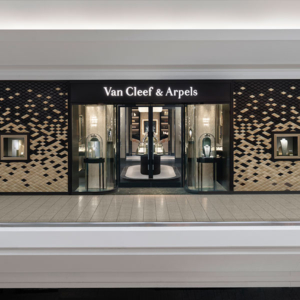
(Photo courtesy of Signet)
- Subscribe to the JCK News Daily
- Subscribe to the JCK Special Report
- Follow JCK on Instagram: @jckmagazine
- Follow JCK on X: @jckmagazine
- Follow JCK on Facebook: @jckmagazine