JCK editor-in-chief Victoria Gomelsky and news director Rob Bates make their predictions for 2026—however murky the future may be. The hosts share their observations on how the bifurcation of demand and the strain on the middle class have affected luxury categories. Rob wonders if this year will bring more stability to the diamond industry, enabling it to roll out marketing campaigns that could usher in a natural diamond revival. Victoria covers the colored stone and metal trends she’s tracking, and how the gold price is shaping designers’ choices for materials. She and Rob also discuss how tariffs will affect the upcoming Tucson shows, what 2026 means for the watch business, and the future of the jewelry market in the Middle East. The year is already off to an exciting start.
Listen Now
Title Sponsor: De Beers (adiamondisforever.com)
Sponsor: Facets of Fire (facetsoffire.com/centurion)
Show Notes
01:30 Victoria’s visit to the Fontainebleau Las Vegas
03:30 Diamond industry outlook for 2026
05:10 The bifurcation of demand in luxury categories
08:05 The great wealth transfer
11:15 What to look for at the Tucson gem shows
14:13 Color trend forecast: seeing red
16:00 How the price of gold is shaping design trends
18:43 Gold price speculations
20:46 The relationship between crypto investors and the watch business
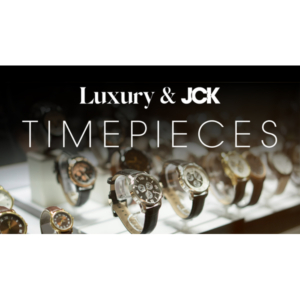
21:51 What 2026 means for the watch business
25:30 The jewelry market in the Middle East
Episode Credits
Hosts: Rob Bates and Victoria Gomelsky
Producer and engineer: Natalie Chomet
Editor: Riley McCaskill
Plugs: @jckmagazine; adiamondisforever.com; facetsoffire.com/centurion)
Episode Transcript
00:00:30 Victoria:
Hey, everyone, welcome to The Jewelry District. This is Victoria Gomelsky, editor-in-chief of JCK and JCKonline.com, calling in from Los Angeles. And I’m with…
00:00:40 Rob:
Rob Bates, news director of JCK and JCKonline.com, calling in from New York City. How goes it?
00:00:48 Victoria:
Happy New Year.
00:00:49 Rob:
Happy New Year to you, too. 2026 is already off to an exciting start.
00:00:54 Victoria:
It is off to an exciting start, I must say. How was your holiday? How was your break?
00:00:58 Rob:
It was very restful and very nice. It was just really restful. I hung out, and we were in New Jersey for a little bit, and it was good.
00:01:08 Victoria:
That’s exactly what you want to hear from somebody coming back from a break, that it was restful. I feel like a lot of breaks are like, you need a break from your break.
00:01:15 Rob:
Yeah, no, it was not like that, thankfully. How was yours? You weren’t in New Jersey, I guess.
00:01:21 Victoria:
I wasn’t in New Jersey. I was mostly in L.A. We had a really nice, chill Christmas. There was a ton of rain in L.A., but it did not dampen our festivities. And then I never do this, but Jim, Niko, and I went to Las Vegas right after New Year’s. We went for the weekend, the 2nd to the 4th, and stayed at the Fontainebleau, which people who’ve come to JCK Las Vegas may have stayed there or may have gone to.
It’s one of the newest hotels. In fact, I think it is the newest hotel on the Strip. It opened two years ago, and it is really beautiful. It’s the second property owned by the same owner—there’s a Fontainebleau famously in Miami—and it’s really beautiful. I daresay it’s the most luxurious space on the Strip, most luxurious hotel.
It has some really great retail, really great restaurants. They turn their pool into an ice rink. And I actually went ice skating with Niko and Jim, and I totally ate ****. As you can imagine, I haven’t ice-skated since I was, like, 12. Niko fell quite a bit, too. He professes to now hate ice skating, but I thought it was hilarious. I mean, I did probably bruise myself, but I was proud that I at least dared to get on a rink. It was just like a rink on a pool, which was kind of cool.
So anyway, that’s a long way of saying anybody who’s in Vegas between now and the show or after the show, during the show, should make it a point to check out the Fontainebleau and at least try dinner at either Don’s Prime, which is their amazing steakhouse, or Mother Wolf, which is real fine—not fine dining—excellent dining experience. It’s Italian. Evan Funke, who’s a chef from here in L.A., opened up an outpost of Mother Wolf in Vegas. And more to come.
I was kind of blown away because, you come to Vegas every year like we all do, and you just go to your same spots and there’s always something new in Vegas, but it’s hard to get that excited. It’s just Vegas. But this was actually kind of exciting, and it was nice to be there with the family.
So that’s maybe a good moment to talk about what we’re going to talk about today, which is, of course, our predictions for 2026 and what we hear and maybe what forecasts we’ve seen. I do hope things are a little clearer by June, and they should be after we’ve gone through numerous shows and numerous get-togethers with the industry. But you’ve just done some research into, I guess, what the outlook is for the diamond trade. Can you talk a little bit about what you’re hearing and seeing?
00:03:42 Rob:
I just did a podcast, or I think it was a webinar. I did one of those LinkedIn things with Avi Krawitz, who’s a well-respected industry analyst. And we did about an hourlong thing on what we expect for the coming year. And I guess my take was that there’s so many variables, and that the world situation is so unpredictable, that it’s very hard to kind of make those predictions.
I think, as far as the diamond industry, a lot of people are wondering when there’s going to be a natural diamond revival, if there’s going to be a natural diamond revival as far as demand, as far as regaining some of the lost market share to lab-grown.
My take was that until the De Beers situation gets settled, as far as the sale of De Beers, and if there is a peace deal with Russia and Ukraine—which is certainly not guaranteed, but if one happens—then it’s possible that the industry could start to really put a lot of money into marketing and really have a stable campaign and ability to put out messages, and that will help the industry.
I think what the industry really needs right now is stability, and it doesn’t have that because of the De Beers situation, because of the Alrosa situation, and obviously because of the demand situation. So I think before it addresses the demand situation, it needs to get those other two things under control.
This could be…this should be a very good year for diamonds, because there’s been all this talk of a luxury slowdown, but jewelry has actually outperformed the rest of the luxury industry, and it has done so for a long time, for at least the last year.
And I think a lot of the existing luxury labels are starting to feel, to some people, a little played out. There’s a sense that they need to refresh how they talk to consumers.
But jewelry, because it hasn’t gotten the exposure of some of these other sectors, does have room to grow and has been growing. And now it’s definitely coming from a lower base than things like clothing and shoes and handbags. I mean, those things have done very well for a long, long time and probably better than jewelry.
But right now, jewelry has actually done well, especially at the high end…. One of the things we’re seeing is this bifurcation of demand. So you have the high end, which is doing very well. You have kind of low-end brands, like Pandora, Kendra Scott, Swarovski—those are all doing well. But the middle is very fuzzy.
The middle class has had a lot of difficulties over the last couple of years, and I think it’s gotten worse over the last year. I remember we did a thing for the holiday, it was on holiday spending plans. And it was like, people with money, they plan to spend a lot. But everybody else, their budgets are either flat or down. And I think that’s what we’re seeing, that people on the high end are going to do very well. That’ll probably be good for the industry. I don’t think it’s necessarily good for humanity or good for our country, but it’s good for the industry.
00:06:46 Victoria:
I hear you. I had this exact conversation just earlier today with Stuart Robertson, president of Gemworld International. We were talking about the Tucson gem shows, which are kicking off in early February—well, in late January and then AGTA, February 2nd, I believe. That bifurcated demand, it feels like that’s been the story for a decade or more.
00:07:07 Rob:
Yeah, but I think it’s definitely gotten more pronounced over the last year or so. And I think one of the interesting things was during the pandemic there were all these programs kind of targeted to middle-income people. There was furloughs, you got money for furloughs, there was expanded unemployment benefits., they were mailing out checks to people. And that helped the middle class in that scenario.
So what you saw was growth across all sectors. Signet did extremely well, and basically the entire industry did well. And you’re not seeing that right now.
Right now, only the rich are kind of really benefiting from what we’re getting out of Washington. And right now, they’re doing extremely well. Everybody else isn’t. So yeah, it’s definitely been the story for a while. It’s been the story, not just in the United States, basically all over the world.
For a while, though, we’re seeing the rich get richer and everybody else kind of going down. But it’s definitely been more pronounced over the last year. And again, as a luxury industry, that’s good news.
I just wrote that article on the great wealth transfer. That’s something that’s also kind of exacerbating it. My friend Paul Zimnisky gave a quote talking about all these people giving money to their kids. That’s fine, it’s great. They have every right to do that. But it exacerbates the existing inequality in the system.
It’s a little troubling, because in the end I don’t think our country…I think it’s hard to imagine it prospering without a thriving middle class. And what really built America, made it into a superpower? The middle class. So I think that’s something that needs to be really focused on going forward.
00:08:43 Victoria:
Yes, well, it’s literally exactly what Stuart Robertson was talking about and how this business, even though those high-end luxury sales, those splashy $100,000 necklaces and big diamond purchases, while those, for me personally, certainly are fun to write about, fun to think about, and do get a lot of attention, that’s not what sustains this industry here in the States.
It’s not who’s shopping at Zales. It’s the chain stores in the malls around the country. It’s the mom-and-pop stores in cities all around the country. And those stores are serving that middle class. And so when that middle class is pinched as they clearly are now, it really does affect the business and it does exacerbate that inequality.
So yes, I like that quote. And you mentioned your great wealth transfer piece. For those who haven’t read it, it’s on the features tab of our website. And it’s a really great reminder of this topic that’s floated around for the last few years.
It’s this imminent—and I’m sure we’re in the midst of it now—this transfer of wealth from the Silent Generation, from the boomers down to their kids and their progeny—mostly millennials, some Gen X, obviously, and I don’t know that it’s hit Gen Z yet.
And it’s not just wealth. It’s not literally just money that’s being handed down. It’s things. It’s especially things, and especially jewelry. So there’s a lot of heirloom redesigns in the future of many of our listeners.
But for those who haven’t read it, do check it out because it’s just a great thing to keep in mind as you’re catering to generations of families and generational heirlooms that may reappear in your store as people are passing them down, trying to figure out what to do with these things.
I mean, it’s not easy to take somebody’s old furniture, even if it was your mom’s treasured armoire. So jewelry doesn’t have that problem. It’s much easier to handle.
00:10:38 Sponsor message:
This podcast is brought to you by De Beers. It’s not every day you get to talk about a truly new idea on natural diamonds. One that gives customers a way to celebrate their person with diamond jewelry as unique as they are. Desert-toned diamonds come in unexpected shades of pale, sunlit whites to deep, smoky whiskeys. Natural colors unlike anything else, for people unlike anyone else. This year, introduce your clients to Desert Diamonds. A diamond is forever. Visit adiamondisforever.com to learn more.
00:11:15 Victoria:
Back to my conversation with Stuart and what we might look for at the Tucson gem shows…I knew, of course, the gem trade has been especially troubled by these tariffs because it’s such a diverse, very international business.
And Stuart talked about the GJX show, which sits across from the AGTA show, now the AGTA GemFair, at the convention center, kind of like the hub of Tucson, at least for those of us at the fine end of the industry.
And it’s mostly American dealers, because, again, it’s the American Gem Trade Association. So it’s business as usual for those dealers. They’re still affected by tariffs because they’re getting product from overseas, but the product is largely in their offices here. So they’re not complicated by how to enter the country as they are arriving in Tucson and what that means for what they have to pay.
That can’t be said for those international dealers who are typically coming to the GJX show, also known as “the tent.” Those dealers are coming from Sri Lanka and Thailand. They’re coming from Australia, Colombia, Brazil, Tanzania, you name it. The entire world shows up. And there’s much confusion about how those goods that are entering the country will be tariffed.
Now, a lot of people seem to think that they’ll have to pay for those goods at the border, and then there may be some sort of refund for unsold goods, but nobody seems to trust that refund will actually happen because there’s not any certainty or clarity about what the mechanisms are to actually pay your tariff and then get it refunded if those things aren’t sold.
So that’s a huge risk people are taking. If you show up with $1 million of ruby and sapphire merchandise from Thailand or any country, and—I don’t know these tariffs off the top of my head per country, but let’s just say they’re even 10%—that’s 100 grand you have to fork over and wonder if it’s going to come back to you. So clearly that is really swaying a lot of people, and we may see a much emptier GJX show from what Stuart has been hearing. And it makes sense, because I wouldn’t take that risk if I were a dealer.
What they’re doing instead, apparently, is they’re going to the Hong Kong show, which is just a few weeks down the line, and making that their hub. That’s a shame for that nexus of shows that has always marked the beginning of the year for the gem industry and really set the tone for what we all can expect later in the year.
So it feels like it may be lackluster. Now I don’t want to be a doomsayer before we even get there. I love Tucson. I’m going to be there. A whole entourage of friends and dealers and jewelers that I know will be there…the main people I expect to see will be there. But a lot of those dealers that maybe aren’t as certain about their business or who their clients are and may just say, “This isn’t worth it for me.” So that’s a big deal. And we’ll have to revisit that when I come back from Tucson and have actual eyewitness experience of it.
In terms of a less fraught topic: In terms of colors, I think we’ll see a lot more red. I mean, not necessarily ruby, because ruby is so expensive, although that is obviously the platonic ideal of red. I think we’ll see a lot of garnets…red tourmalines, spinels, carnelians, even sun stones that can be more reddish orange.
Stuller just sent out—I think it was on Monday of this week, so just at the start of this year—a press release saying its color of the year is red. Before we started this taping, you had asked me if I was going to talk about the Pantone Color of the Year, which is essentially a whitish color, and I was like, no, I have no interest in talking about that. But it seems like more and more people are just anointing their own favorite colors of the year.
00:15:06 Rob:
That’s a new thing for Stuller, right?
00:15:09 Victoria:
I’ve never seen that either. But I haven’t come back to them. I didn’t ask them specifically why they decided to do this, or at least not yet. But it may be that red was already bubbling up in the style and fashion space. We wrote about it. I wrote about it last spring.
It’s not brand-new. But you get this vibe, and it sticks around for a while. It’s not like these colors come and go every month. They have a stay in the business. So I think we can expect to see some more reddish tones and red colors and red stones.
And luckily there’s a lot in the gem world that can offer you in that color that isn’t ruby…. Stuart also talked about this, a lot of substitution for less costly gems, even though people ideally would love that platonic red, that pigeon’s blood, you know, fire engine, tomato red, whatever you want to call it. So yeah, I think we’ll see some more reddish stones.
I also think, and we haven’t gotten to this yet, but the price of gold, which I haven’t checked—it had been $4,500 and now it’s under that. It’s appearing on my Google result as $4,467. So call it $4,500, because that’s more or less what it is.
With that price of gold, even though kind of counterintuitively, it has really supported jewelry, has sustained the jewelry market in the sense that people see it’s got value, enduring value, appreciating value. And so paradoxically, it does still continue to be something people seek and want.
But for jewelry designers who are just trying to hit price points that at retail makes sense, there’s a lot of rethinking of How do we design? So I think what you’ll see this year is a lot of focus on beaded jewelry, where you get a lot of look, big stones, maybe less valuable gemstones, but in the right designer hands, very glamorous, very chic, and very little gold, you know, so they’re not dealing with that costly material.
I think you’ll see more platinum. I haven’t checked the price of platinum, but we know it’s nowhere near the price of gold. So I think you’ll still see more platinum, and you may even see more avant-garde expressions in this way.
I know jewelers who do them at the very high end, very, very elegantly. People like James Taffin de Givenchy, whose brand is Taffin—he’s known for his work with ceramic, also for his work with very special high-end colored stones and high-end diamonds. But he often sets them in ceramic, which is not a precious material, or it doesn’t have to be but in his hands it is.
So maybe we will see more of that as people try to experiment, even though when I talk to jewelers, especially jewelers who have built a foundation on gold and 18-karat especially, they’re very reluctant to turn away from that, because it’s their medium. They are artists, and gold is their medium. It’s the way they work.
So only those handful that have been experimental, and don’t shy away from that, will try things like titanium or ceramic, or even carbon fiber. Arun Bohra at ArunAshi does a lot of work with those different kinds of more newfangled materials and does them very, very well and very high-end.
But for a lot of jewelers, it’s gold or it’s nothing. So we may just see fewer collections still sticking to the material they love, maybe making more expensive pieces but just making fewer pieces, because who can advance that kind of money to have that stock?
00:18:43 Victoria:
Do you see gold going to $5,000? I just shudder when I think about it, but is that likely?
00:18:51 Rob:
Well, it’s certainly within the realm of possibility, considering how quickly it rose to $4,500, but I don’t give that kind of advice.
What is surprising to me is when I meet people, just regular people out in the world, and I tell them what I do, so many people are paying attention to the gold price and are investing in gold, investing in silver, and they all want to know my opinion, and I always tell them I don’t give investing advice.
But I think it’s something that’s really captured people’s imagination, along with other alternative investments like Bitcoin, though that’s not doing particularly well right now. But is it possible it would be $5,000? Yeah, I think it’s possible it might hit that in a couple of weeks….
Generally, when you look at the kind of forecast from the major investment banks, they’ve all been conservative as far as they expected kind of a slow, steady rise of gold. And that’s not what we’ve seen. We’ve seen this kind of very kind of quick acceleration. Last year it rose, I think, over 50% or something like that. I mean, crazy.
Silver is over, I think, 100% or something. Really astounding numbers. So as far as I can tell, I think it’s very, very possible that we’ll see $5,000 gold, and it won’t stop there. On the other hand, I’m not a market investor, so it’s possible that this will be the peak.
00:20:13 Sponsor message:
This podcast is brought to you by Facets of Fire. As an industry, we know natural diamonds mean more. Too often, it’s hard for clients to actually see the difference. Facets of Fire changes that. Working exclusively with natural diamonds, Facets of Fire uses patented nanotechnology to unlock more sparkle, more fire, and more brilliance than traditional cuts. The difference is truly unmistakable. If you’re attending Centurion, visit booth F10 and see it for yourself.
00:20:46 Victoria:
It’s funny you mentioned Bitcoin. Two days before Christmas, I recorded a podcast that hasn’t come out yet—I don’t even think it’s been edited yet—with a cryptocurrency consulting company in Paris that wanted to ask me about the watch business and the watch business as an asset class, and what Bitcoin and crypto investors might know about luxury watches, which was interesting.
It’s not that those are totally unlikely bedfellows. During the hype years, right as the pandemic started and lockdowns got in, there was a lot of crypto money infusing the watch market. That’s part of what led to the hype. As soon as prices started to stabilize in the watch market on the secondary market—they actually started to fall after the start of the Ukraine war in February of ’22—and then there was the crypto collapse, I believe in May of that year, you saw a lot of those speculative buyers leave. But I think it’s funny that there was a crypto company looking for my take on watches. I guess they’re trying to diversify.
I don’t want to undercut or jump in if you’re not finished, but I have been thinking about what this year means for the watch business. You know, it was a tough year. It’s been a tough few years, couple of years coming off those highs of the pandemic for the Swiss.
Clearly the tariffs had a big, big impact. I don’t know where we’ll net out with Swiss exports, which are usually announced in late January for the prior year. But certainly we’ll see a decline. We did see declines in the fall. It’s been a tough couple of years.
I think there’s this general luxury slowdown that jewelry has been a bright spot in…and part of it is, I think, this competition with luxury experiences. I don’t think the pandemic didn’t have anything to do with it, which is a very roundabout way of saying the pandemic emphasized to all of us when we couldn’t go out and have these experiences and go to eat with our friends and go on a luxury trip. It just reminded us all of how much we wanted that.
So now that’s a lot of where those luxury dollars are going…when you’re talking about high-net-worth clients. So watches have suffered from that. And globally, lots of luxury categories have suffered from that—handbags, fashion.
The watch business has to rethink: Where do we stand here, and how do we grow? One way, and this is a big topic, it was a huge topic at Dubai Watch Week—which I mentioned I was going, I don’t know if I ever really downloaded to our listeners what I learned there…. A big throughline of the conversation there was this push for monobrand retail, brands going direct.
It’s been a topic over the last decade, certainly, but more and more seem to be staking their claims on direct retail, expanding their own boutique footprints in the U.S., globally.
And a lot of that has to do with offering experiences to their customers that they don’t think they can offer through their multibrand partners. And some of it is, again, really trying to fight fire with fire when they’re trying to amp up their own experiential retail.
The only way they can do that is through these boutiques. Rolex is a big one. It’s still a major, major, along with Patek Philippe—the two brands in the Swiss watch world that still truly believe in multibrand retail.
But you still see Rolex putting together quite a bit of emphasis on its boutiques. A lot of those are owned and operated by its retail partners, so they’re not necessarily sidelining those multibrand retailers, and yet it’s really about the brand and how the brand looks and feels and what image consumers get of the brand.
So I think that’s a big topic of conversation, because a lot of retailers will find that those Swiss brands—I mean, there are a lot of other brands less at that prestige level that still very much need retailers and advocates for those brands because otherwise, how are they discovered?
But when you’re Omega and you’re Rolex and Patek Philippe and Hublot and Panerai, Bulgari, a lot of these other brands, you really want to control as much as you can. And that means going direct. So I think that’ll be another big throughline this year.
Product-wise, we’ll see. LVMH Watch Week, which is not as big this year as it has been—they’re having a European portion in Milan in a couple weeks. We’ll see what emerges from that. Watches and Wonders, which is in April this year, will of course be the big moment.
We’ll see if Rolex is going to be doing anything to kind of equal the excitement over last year when it introduced the Land-Dweller, its game-changing new model with the new movement. So there, you know, there’s plenty on the horizon, but I do think it’s a year of trepidation and caution and concern. That’s it.
The other thing I’m working on now, and it’s going to be running in late January—in the Times on January 26th—is a piece about the jewelry market in the Middle East.
And I’ve had a ton of conversations about the excitement over opportunities and growth in places mostly around the Gulf Cooperation Council countries, which are the United Arab Emirates, Kuwait, Bahrain, Saudi Arabia very much so, Qatar, and Oman.
And it’s interesting, because I do think that is another big growth opportunity for brands and for jewelers. Even those who operate in the States are now going to shows like Jewelry Arabia.
There’s a show in Doha where much of those are consumer-facing. There are B2B shows, but a lot of those are consumer-facing shows. And there’s a lot of excitement around the wealth, especially now that Saudi is really expanding and promoting its tourism. And there’s a lot of interest, a lot of buildout of retail to support that tourism that they’re expecting. So it’s been interesting to think about these global shifts.
A decade ago, it was all about China in the wake of the financial crisis. It was all about what growth in China meant and how brands could be there. And China is entering, I believe, its fourth year of a luxury slowdown. So these global shifts, we’ve been around long enough to see them ramp up and to see them kind of wane and what it all means.
It continues to be a fascinating business and industry, both jewelry and watches to cover.
00:26:56 Victoria:
I’ve enjoyed talking to designers and jewelers over the last few weeks about how excited they are about being in places like Abu Dhabi or Jeddah, Riyadh, Doha—places that are really so new and there’s so much newness there. And having been to Dubai just in November, I was reminded of the modernity and that focus on new. I could look out my hotel room and literally see the Museum of the Future.
So it does feel like, when the U.S. continues to be as plagued by things like tariffs and…we won’t even mention the politics now, but clearly there’s a lot of Sturm und Drang in the news these days about what’s happening in Latin America. Other countries just seem like safer, more stable bets.
00:27:45 Rob:
Yeah, we’ll see. I think it’s going to be another interesting year. I’m hopeful that it won’t be as tumultuous as 2025, but we’ll have to see. I think there’s some good things on the horizon as well as some bad things. So we’ll just have to see.
00:27:57 Victoria:
Every year is a mixed bag.
00:28:00 Rob:
Life is a mixed bag, right? Life, you know, it ain’t easy.
00:28:04 Victoria:
Life is a series of ups and downs. We all know that. So of course, every year—
00:28:10 Rob:
Is a series of ugly and beautiful, and this is the way it goes. And I expect 2026 will be more of the same.
00:28:16 Victoria:
Yes, no doubt. Thank you. It’s always great to chat. I look forward to seeing you. I’ll be in New York for all the events in March, around Gem Awards, 24 Karat. And I know we’ll talk to you many times before then, but welcome back and I’m wishing you a prosperous, joyful, healthy, happy 2026.
00:28:35 Rob:
You as well. And all our listeners also, we wish you all the best. I’m sure there’s going to be a lot to talk about. We’ll be here talking about it.
Any views expressed in this podcast do not reflect the opinion of JCK, its management, or its advertisers.
- Subscribe to the JCK News Daily
- Subscribe to the JCK Special Report
- Follow JCK on Instagram: @jckmagazine
- Follow JCK on X: @jckmagazine
- Follow JCK on Facebook: @jckmagazine