When Anglo American put its 85% stake in De Beers up for sale in early 2024, it wasn’t clear if anyone would want to buy the troubled company. But now there are reports that six consortia have expressed interest.
While it’s notable that two ex–De Beers CEOs have thrown their hats in the ring, it’s even more significant that two countries, Botswana and Angola, have publicly said they will bid for the company. (Botswana currently owns 15% of De Beers, but President Duma Boko said he hopes the country can acquire a “controlling stake.”)
Angola and Botswana are allies and members of the Southern African Development Community (SADC). Yet in the past week they have spelled out wildly different visions for De Beers, and some have detected a growing rivalry between the two producer countries.
Botswana has long been the stable, prosperous “clean” democracy in southern Africa. Angola, on the other hand, has weathered several ugly governance issues. However, ever since the natural diamond market began deteriorating, Botswana’s government has seemed a lot more erratic. With all due respect to President Boko, who is coping with a terrible situation at home, his recent contention that his government can buy De Beers by the “end of October” appears quite unrealistic, especially since he said he only has “potential collaborators” lined up. (Boko named one: Oman’s sovereign wealth fund.)
In its statement, the Angola government declared it is part of a “fully financed offer” that would give it a minority stake in De Beers. (It didn’t name any co-investors.) Angola is a significant diamond producer—according to 2024 Kimberley Process statistics, it tops Botswana in production by value. And although De Beers isn’t currently selling any Angolan diamonds, the company has been prospecting in the country, and has repeatedly hailed its potential. It’s quite likely Angola will eventually be part of the De Beers “club.”
Angola envisions De Beers being owned by a partnership of diamond-producing nations, including Botswana, Namibia, and South Africa, where they would all “participate meaningfully” and “safeguard De Beers’ long-term growth.” That sounds more attractive than Boko’s stated desire to gain “effective control of the industry.”
“A consortium of diamond-producing countries is an important opportunity,” industry analyst Edahn Golan tells JCK. “I think the format Angola is suggesting is refreshing. It addresses one of the industry’s biggest concerns of De Beers being owned by a majority shareholder that is not fully concerned with the industry’s long-term success.”
This new De Beers might even make its African ownership part of its branding, and license out the “De Beers” name, which is well-known but has considerable baggage.
African nations understandably want more control over their resources. Of course, it’s not clear how the consortium Angola envisions would be structured, and whether Namibia and South Africa would even be interested. In addition, owning De Beers could increase these countries’ economic exposure to diamonds at a time when it might be best to diversify.
Still, for a country that’s traditionally had a troubled industry, Angola is looking like a very interesting player.
Before the war in Ukraine, Alrosa was generally considered a stabilizing influence on the trade. The Russian producer mostly just mined its goods, sold them, and made solid profits—while De Beers went through an occasionally confounding series of management and strategy changes. But now, with Alrosa on the sidelines, Botswana reeling, and De Beers in flux, some in the business hope that Angola—whose economy is based on more than diamonds—will fill a similar steadying role. Lord knows, the industry needs it.
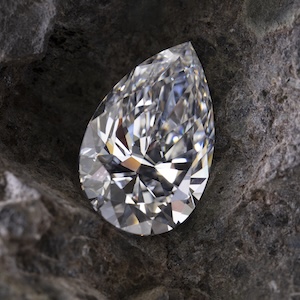
(Photo courtesy of De Beers)
- Subscribe to the JCK News Daily
- Subscribe to the JCK Special Report
- Follow JCK on Instagram: @jckmagazine
- Follow JCK on X: @jckmagazine
- Follow JCK on Facebook: @jckmagazine