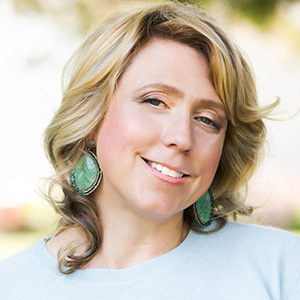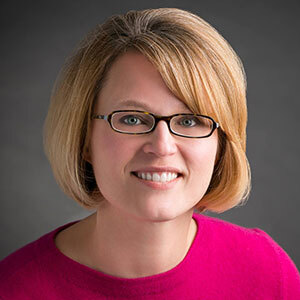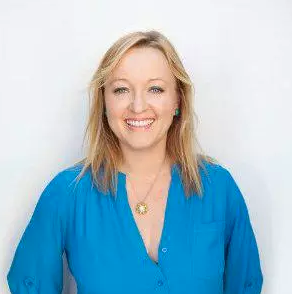
In 2019, when Jeff Smith and Kegan Fisher cofounded the online bridal jewelry e-tailer Frank Darling, the husband-and-wife tech entrepreneurs saw an opportunity to innovate the customer experience offered by legacy jewelry e-comm brands such as Blue Nile and James Allen.
“You had these great large brands that hadn’t really evolved to meet the changing demands of their customers,” Fisher tells JCK from her office in the company’s showroom in New York City’s Tribeca neighborhood. “The whole customer experience, it just felt dated. Their approach to customer service, the experience of shopping on the website, what the showroom was like—none of it felt like it had evolved. I always said that you could go online and spend 20 bucks buying a toothbrush and have a better experience than you could buying diamond jewelry online.”
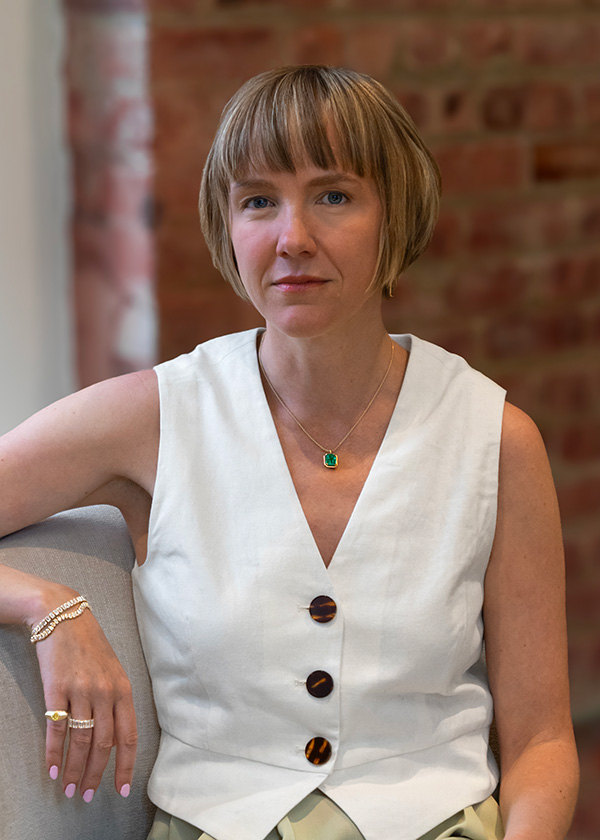
Fisher and Smith were turned off by the preponderance of marketing messages aimed at men, as well as by the sites’ general branding, “which was very beige and always very heteronormative,” she says. “Nobody was thinking about, ‘How does Gen Z shop and identify with this category?’”
At first, the business was based purely online, with a Warby Parker–esque twist: Frank Darling offered prospective customers a try-at-home kit of bridal ring options in silver and CZ, based on a core collection designed in-house. “We had hired somebody who was ex-Tiffany, and she designed the original collection for us and did a beautiful job,” Fisher says. “But what we started hearing right out of the gate was, ‘Can you make it like this? Can I see it in person?’ We got those questions over and over again. At the beginning, we literally would rent space by the hour to meet people and show them stones. And they started buying.”
By the end of 2019, two important concepts had taken root: Clients wanted to have an in-person experience, “and two, we saw people who never wanted the thing in the collection,” Fisher says. “They always wanted custom. It was always like, ‘How about this? How about that?’”
Today, the company serves its core demographic of 25- to 35-year-olds at 11 by-appointment showrooms across the country, including three in New York City. “All of our showrooms have a living room feel,” Fisher says. “We want it to feel like going over to your best friend’s house to look at diamonds.”
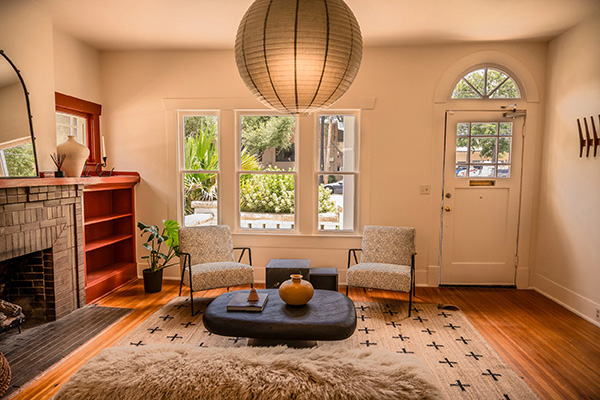
Frank Darling still offers its try-at-home kits, but Fisher estimates that 60 percent of the business is custom. Below, she shares her biggest takeaways about what resonates most with older Gen Zs and younger millennials when they’re shopping for engagement rings.
Women are leading the bridal ring shopping experience.
“The journey is mostly female-led. When we started the brand, we thought that the industry was really focused on the male customer, and we really wanted to be focused on the female customer. It was a woman-led experience, and it was a focus on customization.
“And because she’s leading that experience, she’s saying, ‘Hey, I don’t want a platinum solitaire. I want this cool swoopy thing in yellow gold.’ And that just lends itself to more exciting opportunities on the design side and a real, I think, branching out from what we’ve thought of as the engagement category historically. And while we still do a lot of solitaires, we do a lot of yellow gold solitaires, less platinum solitaires, as I think that the trend has moved in that direction.”
For lab-grown ring customers, the sweet spot is $5,000.
“We lean heavily lab-grown. Off the top of my head, we’re probably 75% lab-grown, 25% natural. Our heaviest natural markets are New York, so New York does skew higher than that. Now, especially since it’s holiday, we’re seeing a lot of big budgets come out, so that’s always fun. But I think for people shopping, our average order has always been around $5,000, which I think tracks with the general engagement market.
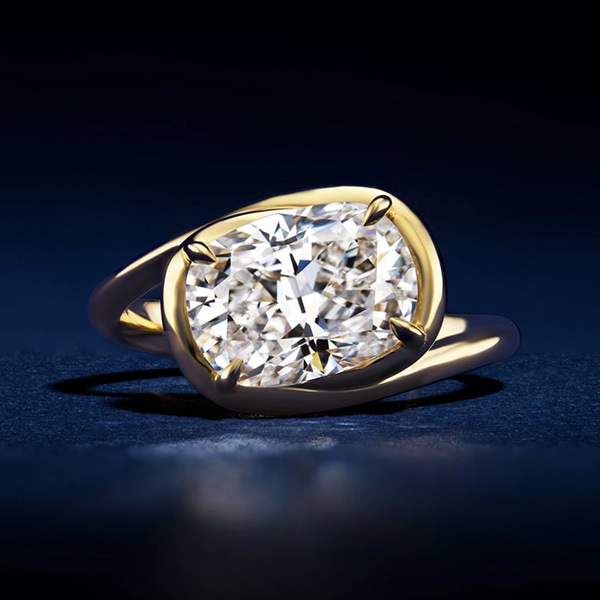
“For people shopping for a $5,000 price point, lab-grown is such a great product offering. And they can get an absolutely beautiful 2 to 3 carat diamond. People shopping for natural diamonds, they’re more in the $10,000 to $30,000-plus price point. Obviously, that tends to be more focused on the New York market and some in L.A. as well.”
There’s no reason you can’t sell a bridal customer multiple engagement rings.
“We see people buying multiple rings. Lab-grown has made this possible. It’s not ‘I get the one ring and I wear it for the rest of my life’ anymore. It’s, ‘I get the ring and I style it with a stack. And maybe I get a fun right-hand ring, too. And maybe I get my classic solitaire, but I also get my funky, going-out solitaire.’ It’s opening up the category for it to be more fun and for people to engage with diamond jewelry in a more playful way. There are so many more possibilities, obviously, when the price isn’t locked into a big, expensive stone.
Chunkier rings and antique cushion-cuts are the styles du jour.
“Generally speaking, things have trended chunkier. But not everybody’s getting a 6-millimeter band. People are getting 2, 2.5, 3-millimeter bands. So we’re definitely out of the 1.5-millimeter world, which is wonderful. And elongated cushions and antique stones. There have been so many celebrity engagements, I feel like the whole industry now is like, ‘I need more antique cushions,’ because there are literally not enough antique cushions to go around.”
But custom is the trend of the year/decade/century.
“People are coming to us because they want custom. And that could be small details like, ‘Can I get a birthstone detail, or can we add some diamond detailing?’ But also, we do completely off-the-wall, totally ground-up sort of stuff that’s really fun, too. And I don’t think we would be seeing that if the shopping experience hadn’t trended so much toward women being at the forefront of the journey.
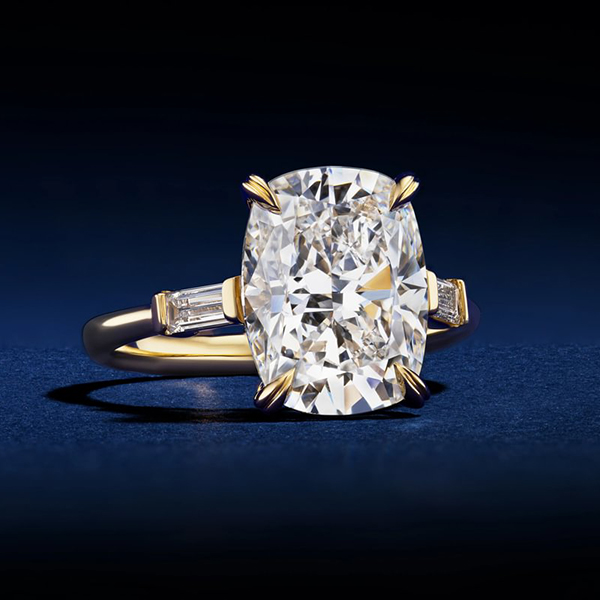
“The bulk of it is what we consider ‘semi-custom,’ where people are getting small customizations like side stones or pavé detailing or engraving or things like that. They’re using a collection style as a jumping-off point and saying, ‘I like this and make it like this.’ And then a smaller percentage of that is what we consider totally custom, as in, ‘Here’s the sketch that I made.’ Or sometimes they’re like, ‘Here’s the thing AI made for me.’ And then we make that.”
Omnichannel retail rules.
“We thought there was an opportunity to combine the transparency of an online marketplace where people could shop and understand the price points and not feel like they were going to get bamboozled by a salesperson, with the higher touch experience of going into a jewelry store.
“I think people do, especially for this purchase, like the idea of having a place that they can go to look at stones in person, to try things on their hand, to see what they’re going to look like, and also somebody that’s going to support them for all those post-care things that happen because engagement rates do require post-care. And having a local footprint, I think, is an important part of that. If you can combine that local footprint with the backing and the support of a larger brand, that’s a really incredible place to be.”
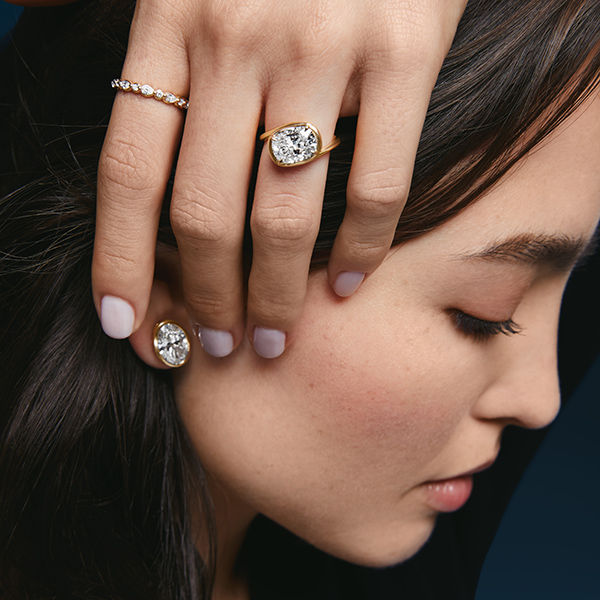
Top: A model wearing Frank Darling’s Ribbon ring, from $1,790 (center stone sold separately)
- Subscribe to the JCK News Daily
- Subscribe to the JCK Special Report
- Follow JCK on Instagram: @jckmagazine
- Follow JCK on X: @jckmagazine
- Follow JCK on Facebook: @jckmagazine