Whether you’re a newbie keen to dip your toes into the timepiece category, a sales professional who needs to understand horological terminology, or a watch aficionado thrilled by the prospect of getting hands-on with a movement, you won’t want to miss the educational opportunities offered by the Fondation Haute Horlogerie (FHH) at the JCK and Luxury shows in Las Vegas.
Founded in 2005 by Audemars Piguet, Girard-Perregaux, and the Richemont group, FHH is a nonprofit in Geneva that was established to serve as a reference for all subjects related to high-end mechanical watchmaking.
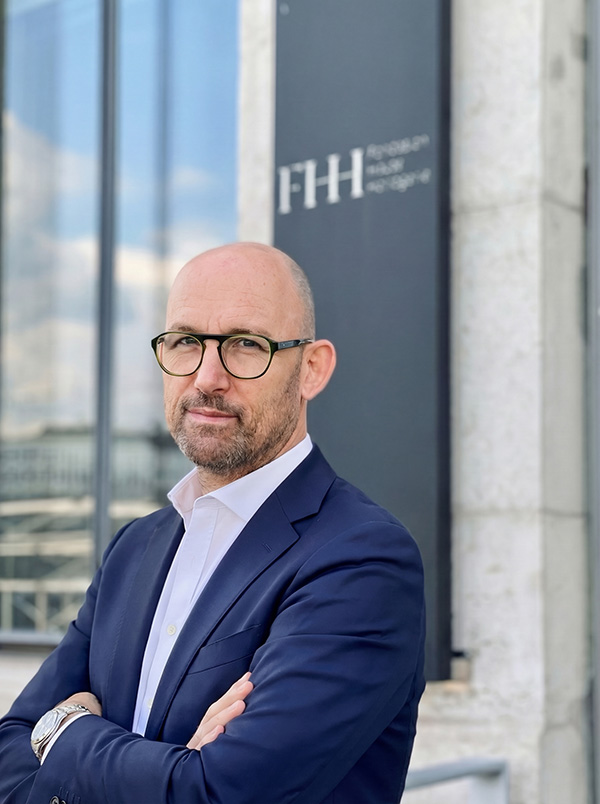
“At the turn of the century, everybody was saying, ‘We do haute horlogerie,’ but nobody actually understood what it meant,” Pascal Ravessoud, FHH’s vice president, tells JCK. “The idea behind the FHH was to make people understand what haute horlogerie actually was. Even if it was complicated to describe, we at least wanted people to understand the values, what’s behind it, the history, the importance of the human hand.
“FHH was always designed to be a foundation for the whole industry to have a better appreciation for fine watchmaking—because a better educated customer is a better customer,” he adds.
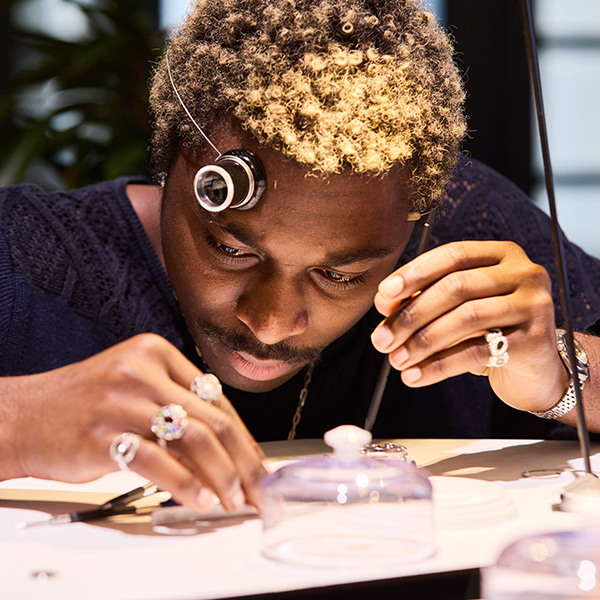
For the first time, the organization is bringing its academy to jewelry week in Las Vegas. On Friday, May 29, at 10 a.m., in Bassano 2803 on Level 2 of The Venetian Expo, FHH will convene the first of six hands-on watchmaking workshops ($290 each). In addition to allowing you to disassemble and reassemble a watch movement, the 90-minute experience is designed to help participants understand the importance of each part and its role in the harmonious functioning of the whole. With each workshop limited to eight participants, registration is required.
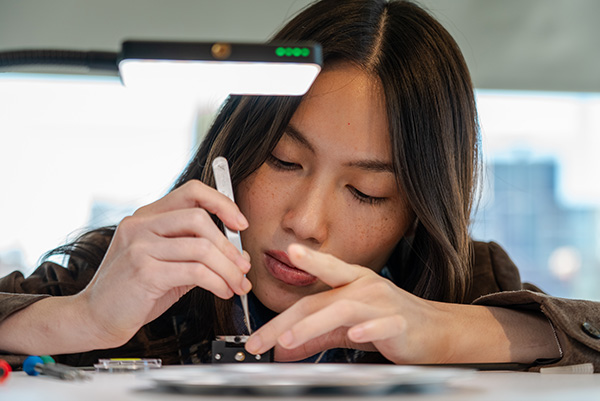
“The idea of the workshop is not to show people that it is so easy to become a watchmaker—but, on the contrary, to show the distance you have between a normal human and a watchmaker,” Ravessoud says. “The experience was always designed to say, ‘These people are really special. And now I get why these watches are so special.’”
For attendees interested in the history of watchmaking, Ravessoud will present a session on “Tool Watches,” an industry term for more robust timepieces that were initially designed to aid in rugged outdoor activities like aviation, deep-sea diving, mountain climbing, and scientific exploration.
“Why are divers’ and pilots’ watches so desirable today?” he says. “Although we don’t use them as tools anymore, there’s a whole range of watches that have a very strong past and are still very popular. And we’ll explain why.”
Ravessoud will also lead a session on “Iconic Watches” on Sunday, May 31, at 12:30 p.m. in Titian 2202 on Level 2. “It’s going to be the usual suspects ranging from the first years of the 20th century, starting, of course, with the Santos by Cartier,” he says. “We’ll have a look at the Cartier Tank, the Jaeger-LeCoultre Reverso, Panerai, the Patek Philippe Calatrava, and, of course, the two big ones, the Audemars Piguet Royal Oak and Patek Philippe Nautilus.
“We’ll also look at timepieces from space like the Omega Speedmaster, watches for pilots like the Breitling Navitimer, and the IWC Portugieser. All these specific watches, they have a history that sometimes is anecdotal but actually made their success. We’ll see also why revolutionaries in Cuba, like Fidel Castro and Che Guevara, wore watches like the Rolex GMT Master. It’s a glimpse of a bygone era but one that has a rich history.”

Finally, show attendees who wish to better understand the business of watches are bound to appreciate two panel discussions moderated by Clio Godrèche, senior project manager at FHH, on the Spotlight Stage on Level 2 of The Venetian Expo: “The New Watch Customer: Understanding How Gen Z is Reshaping the Watch Market,” on Friday, May 29, at 3 p.m.; and “The Future of Retail” on Sunday, May 31 at 3 p.m., which examines why relationships with sales associates have become central to the brick-and-mortar buying experience.
The through line connecting all of FHH’s education in Las Vegas is the conviction that while the United States is a mature market, there’s plenty of room to grow, and the organization wants to serve as the definitive reference point for watchmaking knowledge for both industry and consumers.
“Historically, and especially now, the U.S. is the number 1 export market for watches,” Ravessoud says. “But in terms of mechanical watches, the penetration rate is very low. You see a lot of people, like Bill Gates, walking around with a $70 Casio and tons of people with Apple watches—executives, presidents, owners that are not into the hobby yet. It’s quite surprising. We think there is a lot of potential.”
Top: A participant in one of FHH’s watchmaking workshops (all photos courtesy of FHH)
- Subscribe to the JCK News Daily
- Subscribe to the JCK Special Report
- Follow JCK on Instagram: @jckmagazine
- Follow JCK on X: @jckmagazine
- Follow JCK on Facebook: @jckmagazine