Brooches are back. Antique diamonds are all the rage. With trends like these making certain styles cool again, it’s an amazing time to work in jewelry for David Gotlib, a designer of cufflinks that evoke a sense of history and are worthy of keeping for generations.
Gotlib says he is expanding his eponymous brand in 2026, and is ready for the adventure. As he celebrates 10 years for his business, he wants more people to experience his Antwerp atelier—lifting the curtain on his work for his clients and giving others in the industry a place to gather and share ideas.
“2026 is about deepening the brand’s voice and expanding the world it inhabits on an international level,” says Gotlib. “I’m also opening up the atelier. I want people to experience the pieces the way they’re meant to be experienced—held, felt, seen during their creation.”
A lifelong jeweler, Gotlib is known for his devotion to cufflinks—it’s the only thing David Gotlib makes. His uses 18k gold, natural diamonds, and vibrant colored gemstones. And he’s not going to alter what he does just because, say, a certain pop singer has suddenly made antique diamonds popular.

“My philosophy is that jewelry should feel inevitable, like it always existed, and you simply discovered it. I’m not drawn to trends or to ornamentation without purpose,” Gotlib says. “I’m interested in permanence, in the quiet power of form, in the way a piece becomes part of someone’s personal mythology.
“Heirlooms aren’t declared; they’re earned,” he adds. “They become heirlooms because someone reaches for them again and again, because they witness milestones, because they’re chosen with intention.”
Gotlib was inspired to start his jewelry label by an heirloom pair of cufflinks—ones that his grandfather had worn regularly for more than three decades. Gotlib’s grandmother gave them to him on the occasion of Gotlib’s eldest son’s bar mitzvah. The gift still resonates with him.
“The cufflinks were deceptively simple: clean geometry, a quiet sense of proportion, and a weight that felt intentional in the hand,” says Gotlib. “They were made decades before I ever saw them, but they carried the fingerprints of the person who wore them. Tiny scratches. Softened edges. The patina of a life lived.
“What struck me wasn’t their monetary value but their emotional gravity,” he says. “They were proof that an object can outlive its owner and still hold their presence. That realization changed everything for me. It made me want to create pieces that weren’t just beautiful in the moment, but meaningful across generations.”
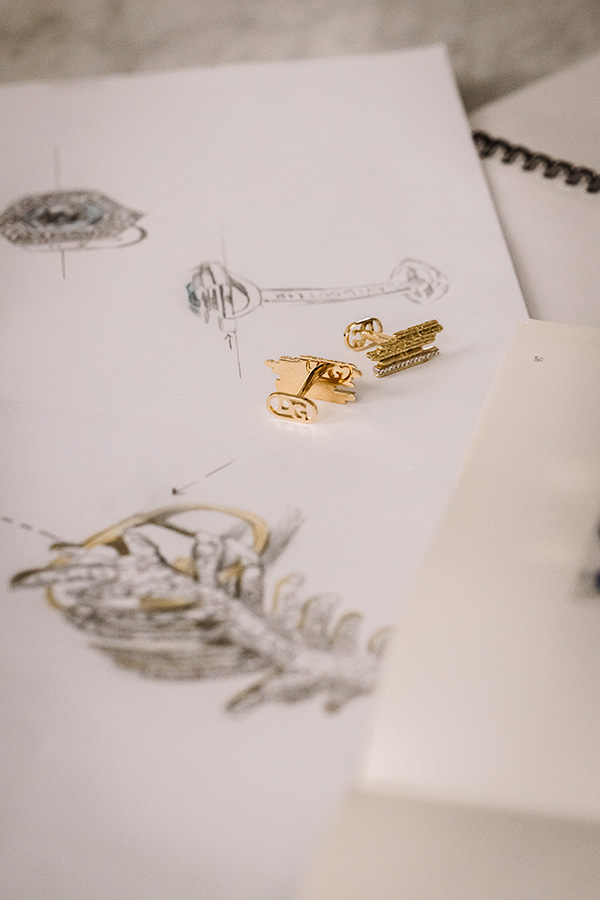
As Gotlib releases new collections—which he hopes to do in 2026—all his cufflinks fit within a larger world of the brand. His early pieces were about line, symmetry, engineering, and discipline. He wanted to master structure before he allowed himself to break it, he says.
Then he created Chroma, and color became a part of his design world. Gotlib added the Astor and Metropole styles last year. Today his work balances two impulses: the rigor of form and the freedom of expression.
He notes that on the Chameleon Red cufflinks, which are one of his favorite sets, the color of the rhodolite center stones changes subtly as the light shifts—so even cufflinks someone might wear for years can still surprise them.
“Instead of controlling every variable, I allow intuition to guide me. The palette because a kind of emotional vocabulary,” Gotlib explains. “The precision is still there in the architecture of the pieces, but the color introduces movement, spontaneity, and a sense of play.”
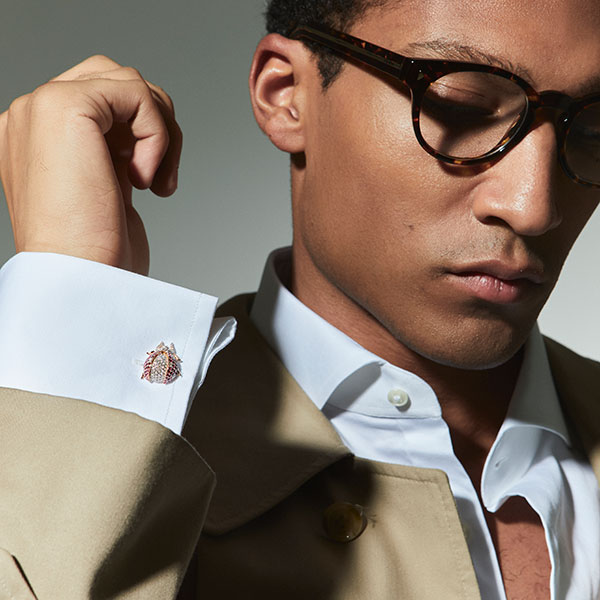
Top: David Gotlib’s 18k pink gold Lady Bird cufflinks ($14,000) are made with 190 round brilliant white natural diamonds and 140 rubies. (Photos courtesy of David Gotlib)
- Subscribe to the JCK News Daily
- Subscribe to the JCK Special Report
- Follow JCK on Instagram: @jckmagazine
- Follow JCK on X: @jckmagazine
- Follow JCK on Facebook: @jckmagazine