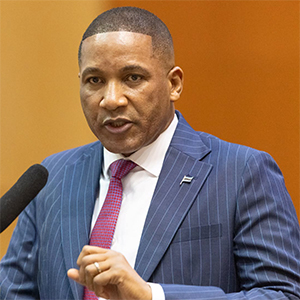
Last Monday, during his annual State of the Nation address, Botswana President Duma Boko (pictured) named the Global Diamond Consortium (GDC)—the investment group headed by former De Beers CEO Gareth Penny–as his buyer of choice for Anglo American’s 85% stake in De Beers.
As Botswana owns 15% of De Beers, it has a virtual veto over any possible purchaser of the rest. Some hoped that Boko’s ringing endorsement would mark the “beginning of a new chapter,” as one De Beers executive put it to JCK.
But to others, it felt like just another page in what’s become a long, drawn-out saga, which may still have a long way to go. Anglo American first put its 85% share in De Beers up for sale in May 2024, which means the entire process has now taken two and a half years, despite frequent executive pronouncements that the end is near.
In a statement to JCK, Anglo American said it “is are encouraged by the progress we have made to date” and it looks forward to receiving “binding transaction documents.”
Yet it appears a few more details must be ironed out before those documents are signed.
During his speech, Boko mentioned that Botswana would, under the new structure, own 30% of De Beers—double its current share. “Botswana will become the single largest shareholder in De Beers, and with that comes greater influence in [its] strategic decisions for decades to come,” he said.
That number represents something of a concession for Boko, who previously had insisted that Botswana become De Beers’ majority owner. But in July, Bloomberg reported that, after several fruitless attempts to raise outside funds, the president accepted that his country would have to settle for a minority stake.
Boko also said in his address that fellow diamond producers Namibia and Angola were planning to join the consortium.
Angola appears ready to get on board, with its ministry of mines spokesperson telling Reuters it is seeking a 10% stake in De Beers.
But neighboring Namibia repeatedly has given mixed signals about whether it will commit government funds to buying De Beers. Following Boko’s speech, an article in the Windhoek Observer indicated that officials were still mulling the question, as buying 5%–10% of De Beers could mean Namibia would have to sell as much as $160 million in government bonds. The Observer quoted a briefing document that recommended Namibia insist on a board seat, as well as “ironclad protection against forced capital calls if De Beers continues to bleed cash.” (Officials in Namibia’s Ministry of Industry, Mines, and Energy didn’t respond to requests for comment.)
Even if all three governments do join the consortium, their influence may be limited. Bloomberg reported that “a key condition for some of the consortium[’s private] backers” is that the governments’ stake stay under 50%.
There’s been a lot of speculation about who those private backers are. The GDC’s first, and so far only, release listed its founders as Penny and two sightholders—Saurin (Sonu) Parikh of Diarough and Moshe Klein of New York City-based Grandview Klein. Klein and Parikh both attended Boko’s address in Botswana.
Industry talk says that a third sightholder—Pluczenick, based in Antwerp—is also backing the bid, but it wasn’t listed in the release, and company principal Chaim Pluczenik didn’t attend Boko’s speech. (Pluczenik didn’t respond to a request for comment.)
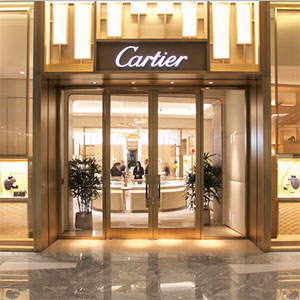
Reuters has reported that two notable trade names—Signet and Richemont (owner of Cartier)—are supporting the consortium. Signet is also a sightholder, but it has so far declined to comment on the reports, though its executives visited Botswana two weeks before Boko spoke. Richemont, which doesn’t currently have a sight, didn’t confirm or deny anything during its recent financial results.
“In terms of possible acquisitions, we haven’t made our mind up about anything,” said company chair Johann Rupert. “Any investment we may make in diamonds will not make any meaningful difference to our balance sheet or profit and loss account.”
The GDC statement also thanked the “government of Oman” for its “support and partnership.” The oil-rich Gulf country isn’t a diamond producer, and a source tells JCK that the Omani money will come from either its sovereign wealth fund, or, more likely, private investors.
Still, the fact that the GDC has attracted mostly trade backers has raised concerns about possible conflicts of interest, since these sightholders and retailers will be both De Beers owners and customers.
“Let’s say a massive diamond comes out [of the ground],” industry analyst Edahn Golan said on The Diamond Dudes podcast. “Will the owner-rightsholders just take it for themselves?… That’s something that has to be discussed.”
(Photo courtesy of the government of the Republic of Botswana)
- Subscribe to the JCK News Daily
- Subscribe to the JCK Special Report
- Follow JCK on Instagram: @jckmagazine
- Follow JCK on X: @jckmagazine
- Follow JCK on Facebook: @jckmagazine