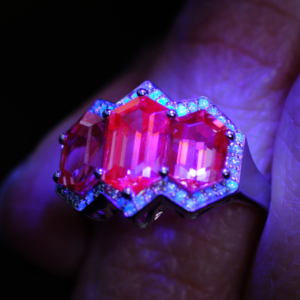

Jayne Bond is a part-time jewelry consultant who never expected to end up in a battle with one of the world’s biggest retailers. And yet for the last year, she’s conducted a dogged probe into whether jewelry sold on Amazon contains dangerously high level of cadmium, which recently spurred an investigative piece in the U.K. Sunday Times.
Her saga started last summer when she sustained a hand injury caused by a faulty phone charger she bought on Amazon.
“Amazon’s first line of defense is: ‘We’re a marketplace, deal with the person who sold it to you,’” says Bond. “I thought, Hang on a minute. How does it work in the jewelry business?”
She bought a piece, billed as silver, and brought it to the Birmingham Assay Office, which found that it contained 92.3% cadmium. The legal limit for the heavy metal in jewelry in the U.K. is 0.01%—which means the piece was 9,000 times the legal limit.
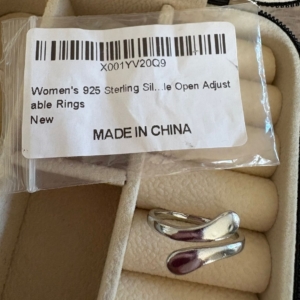
In the United States, currently there are no federal rules on cadmium in jewelry, although the Consumer Product Safety Commission has urged the industry to adhere to voluntary limits, and states have imposed their own restrictions. For instance, California says that children’s jewelry items must not contain more than 0.3% cadmium.
After Bond sent her findings to Amazon, the e-tailer “put her off,” she says. A few months later, she bought a second “silver” ring from the same seller and found it contained 27.2% cadmium—and no silver, she says.
Even that much of the heavy metal presents a “real risk,” according to Bond.
While there’s long been concern about cadmium in children’s jewelry, scientists consider it a carcinogen that can also affect adults’ kidneys, liver, lungs, and bones.
“It’s one of the most potent metals to cause toxicity,” Christer Hogstrand, a professor in molecular ecotoxicology at King’s College London, told The Times. “You should minimize any cadmium exposure. We’re avoiding mercury at the moment, aren’t we? Mercury is really bad, cadmium is worse.”
But since it’s silver-colored and abundant in e-waste, many jewelry manufacturers use it as a “cheap fill,” Bond says.
She believes that Amazon can’t claim it’s just a marketplace in this instance, since it “lists the products, bills for the items, delivers them, and, in some cases, stores them in its warehouses.”
She eventually contacted her local government but found they were largely powerless to control these products, which are mostly produced in China. Finally, she reached out to The Times, which conducted a several-months-long investigation that largely confirmed her findings. One item, billed as .925 (92.5%) silver, was found by the Birmingham Assay Office to contain 33% cadmium.
Amazon did not return a request for comment from JCK, but told The Times that “we take customer safety seriously, and we’re reaching out to Ms. Bond regarding her experience. Amazon requires all products offered to comply with applicable laws, regulations, and Amazon policies.… We’re in the process of removing these items after an internal investigation.”
Shortly before The Times piece ran, U.K. National Trading Standards had one item removed from the site. But Bond believes that Amazon is still selling many pieces that contain large amounts of cadmium—which she’s been spotlighting on LinkedIn.
Bond also found several other items with high levels of the metal on TikTok, but when she notified the platform, they were taken down. Still, in some cases, she believes they have been put back up. “It’s like playing whack-a-mole,” she says.
Regardless, she says she intends to keep at it, noting she’s been investigating this for a year. “I’m not going away,” she says. “I have more energy than the Duracell Bunny.”
(Photos courtesy of Jayne Bond)
- Subscribe to the JCK News Daily
- Subscribe to the JCK Special Report
- Follow JCK on Instagram: @jckmagazine
- Follow JCK on X: @jckmagazine
- Follow JCK on Facebook: @jckmagazine