


Sky-high spot prices mean more consumers are looking to sell their gold jewels. Here’s how to capitalize on this moneymaking opportunity.
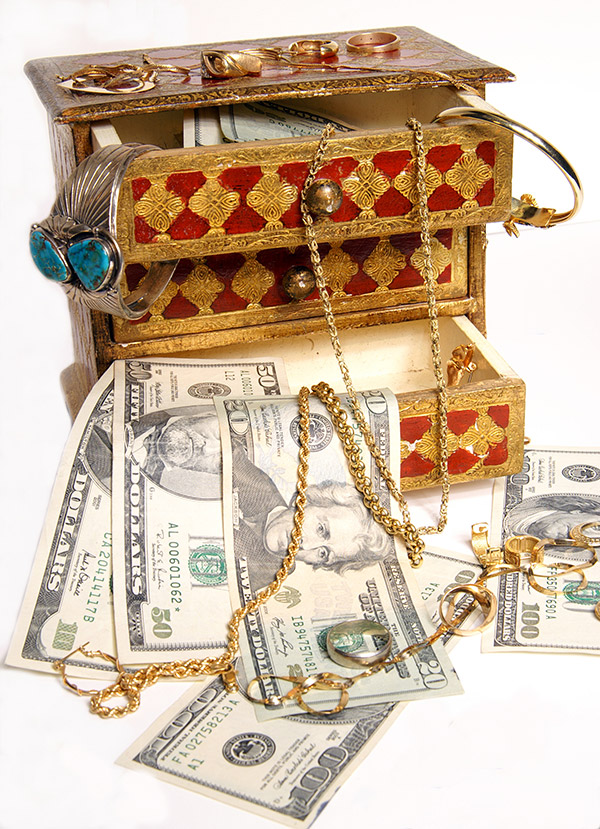 As gold prices continue to dominate headlines, some retailers have encountered price resistance while others are holding steady (and even seeing increased demand for heavy gold pieces). Meanwhile, quite a few jewelers are reporting that over-the-counter (OTC) gold buying has become a consistent and substantial revenue driver—enough to keep them comfortably in the black in today’s unpredictable economy.
Kathleen Kimball, president and CEO of George Thompson Diamond Co. in Camarillo, Calif., says gold buying has long been a legitimate source of income for jewelers: “We started establishing that as a revenue stream during the ‘We buy gold’ craze in 2008 and 2009,” she tells JCK.
If you’ve only offered gold buying as a service to clients—perhaps to offset the cost of a custom project—now’s a great time to consider transforming those transactions into significant moneymaking opportunities. In 2025, Kimball saw healthy gains from her store’s OTC gold sales, which accounted for 15% of her store’s revenue overall. “It was basically our profit margin for the year.”
Steven Sinatra, owner of World Pawn Exchange in North Bend, Ore., suggests scaling this aspect of your business if you’re bringing in at least 100 grams a month. “A jeweler that isn’t buying OTC versus one that is buying OTC, all other things being the same, I would expect a 20 to 40% increase of profitability for the one that is buying,” he says.
“Over-the-counter gold buying is not only a way to make more money. You also gain more customers and get more foot traffic and word of mouth,” Sinatra adds.
Ready to level up your gold-buying program? Ahead find all the essential info and best practices to help you succeed, whether you’re doing it for the first time or looking to optimize your current practices.
Legal Obligations
Some states have regulations that require jewelers to apply for a “secondhand dealer” or “precious metals dealer” license. The rules and guidelines will be listed on your state’s website (and often the requirements vary by county or local municipality). Some states have a mandatory holding period—meaning you might have to wait as long as 30 days before reselling the OTC gold you acquire. If your state has this stipulation, it may pose more of a risk to your profit goals, since refiners typically determine payouts based on the date they receive the material. And that day’s spot price may be lower than the one you used to calculate the amount owed to your client on the day of the sale. “The longer you have to hold the gold, the more margin you should be making to make up for any changes in the gold market,” Kimball says.
 Revenue Guidelines
To calculate gold value, use this simple formula: Multiply the gram weight times purity times that day’s spot price (for example, if you have a piece of 18k gold jewelry that weighs 100 grams, you’re looking at 75 grams, or 2.65 ounces, of gold content). Most jewelers JCK consulted say they tack on margins ranging from 20 to 40% of the total value per transaction. Consider carefully the number of competitors in your market and what their margins are, then calculate your customer payout terms from there. The amount of cash you have on hand to dispense at any given time should factor into that decision as well.
“More and more pawnshops and mom-and-pop boutiques are starting to pay upwards of 60 to 70%, just to be able to keep their reputation and maintain the repeat business of their customers,” says Neeraj Bajaj of Nick Bajaj Estate Jewelry in Tucson.
In addition, intense media attention to rising gold prices means “the general public is coming to stores knowing what their gold is worth, and that their little rope chain that they bought for 60 bucks can go for $400 now,” Bajaj adds. Those customers, he says, are angling for 100% of the spot price. As such, he recommends paying the client on the upper end of the spectrum—especially if you’re in a big city with a high concentration of jewelers.
 Refiner Payouts
While there are small refiners operating in most markets, the bigger, better-known companies—Hoover & Strong, Elemetal, Dillon Gage, and Noble Metal Refining—typically pay the most favorable rates (usually 97 to 99% of the spot price). Refiner policies vary. Some calculate the value of the gold according to the spot price on the date they receive the material, so it pays to work with a company that will let you “lock in the gold price when you call in a batch,” Sinatra says.
It’s standard for refiners to charge extra for removing stones—but some have minimum weight requirements per job, and command hidden processing fees, often known as “lot fees,” which might include charging to determine purity, deductions for low-grade metals, and more. “There are people that trust their refiner’s specific point of contact and would even follow them to another refinery—it’s all very trust-based,” Sinatra adds.
In planning to ramp up your OTC gold buying, make sure you are factoring in operational costs such as shipping and insurance fees and the fact that it could take as long as two weeks for the refiner to remit payment. Some refiners might be willing to give you an advance—say, 60 to 80% upon receipt of the metal—which is “much easier on the cash flow,” Sinatra says.
Another important concern in today’s market is that some prominent refineries recently reported a backlog of jobs—to the point of pausing the acceptance of new shipments for several days. If your refiner is likewise finding it difficult to manage the influx of metal trade-ins, it could further delay payouts. This can take a toll on cash flow, but as of mid-March there is good news: The situation has already begun to course-correct, according to Sinatra.
 Essential Tools
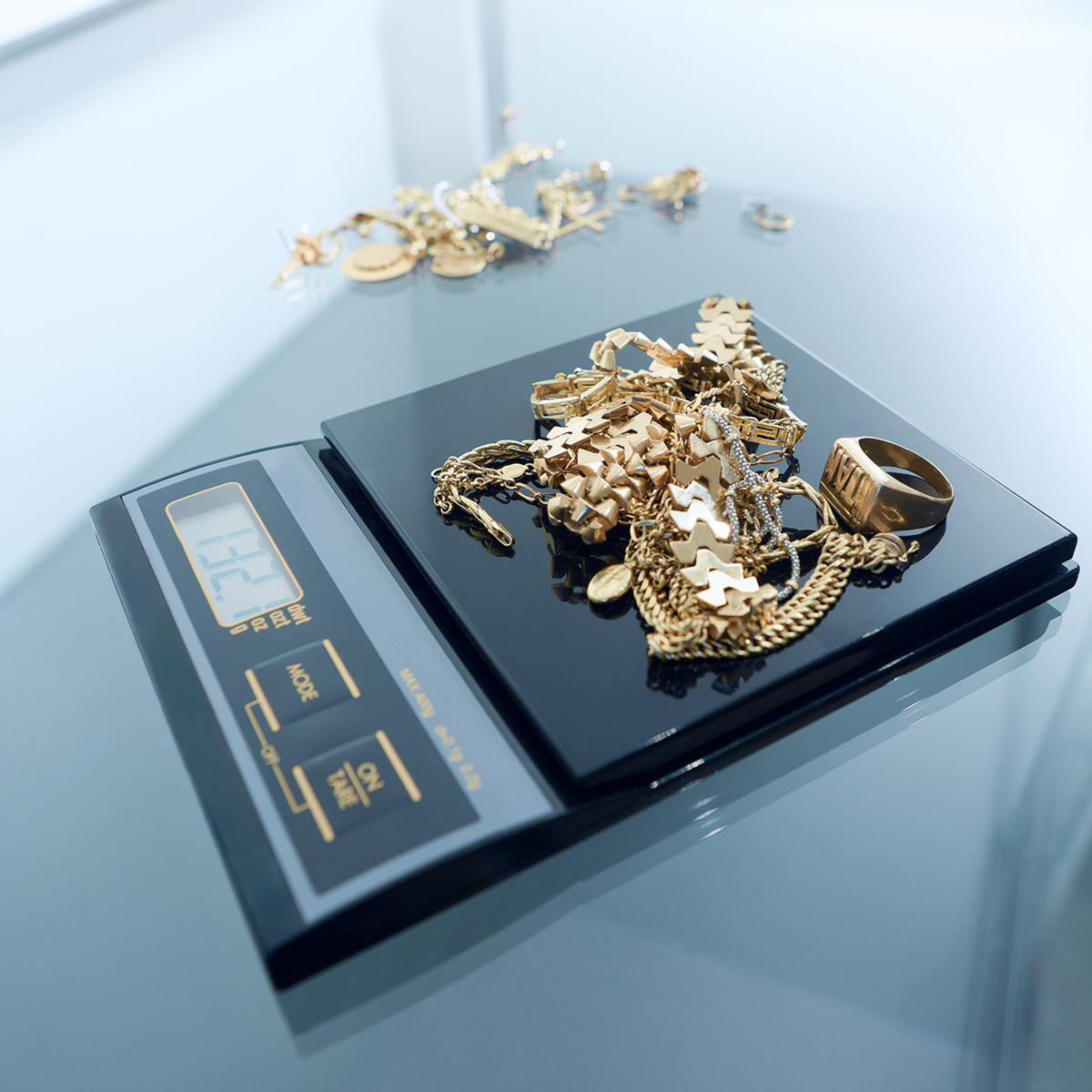
Once you plan on buying more gold from customers, it’s important to invest in a NTEP-certified scale for weighing metals. The National Type Evaluation Program certification indicates that the scale is authorized by the National Conference on Weights and Measures, a nonprofit that has developed uniform national standards for commercial weighing and measuring devices to ensure fairness in the marketplace.
Next, you need an acid test kit, specifically one that comes with a stone (for scratch tests), and finally, a strong rare-earth magnet to instantly detect whether base metals are present in the scrap you’re evaluating.
Kitco is the website/app that much of the jewelry trade relies on for up-to-the-minute info on the spot price of precious metals. Scrap Gold Pro, an app designed by Sinatra, makes it easier (and faster) not only to access current spot prices but also to instantly calculate payouts, customized by percentage (for example, 80% of the total value).
 Increasing Sales
Obviously, the success of any OTC gold-buying program hinges on attracting a steady stream of customers. The usual promotional tactics apply: Direct mail, email newsletters, social media ads, posting to local community Facebook pages, and mentioning gold-buying opportunities in your Google business profile should all work well.
And don’t overlook the importance of outdoor signage. A flashing red “We Buy Gold” light may not be the right approach for every jeweler, but placing an attractive poster in your window or setting up a sandwich board on the sidewalk can be effective ways to get the word out to locals.
Could promoting your gold-buying opportunities cheapen your brand image? “If we were a brand like Cartier, it would, but as an independent jeweler, buying gold doesn’t affect my brand,” says Mark Hicks, owner of Farringdons Jewellery, an antique and estate jeweler in London. “It only helps diversify our services.”