
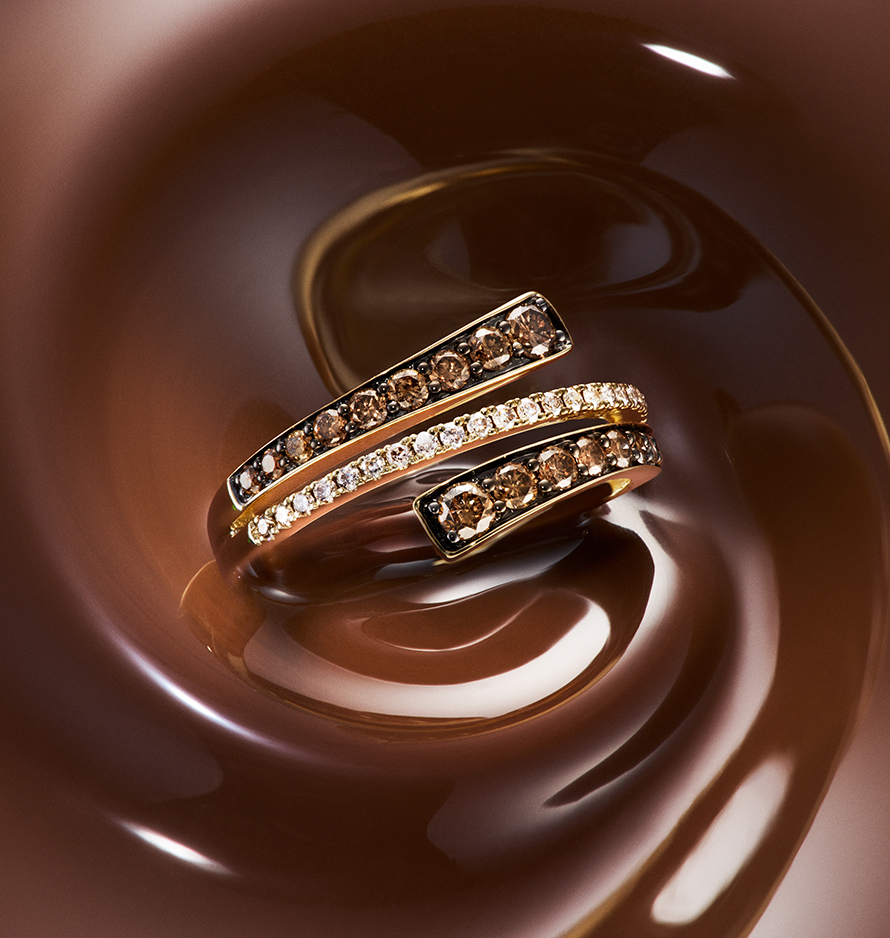
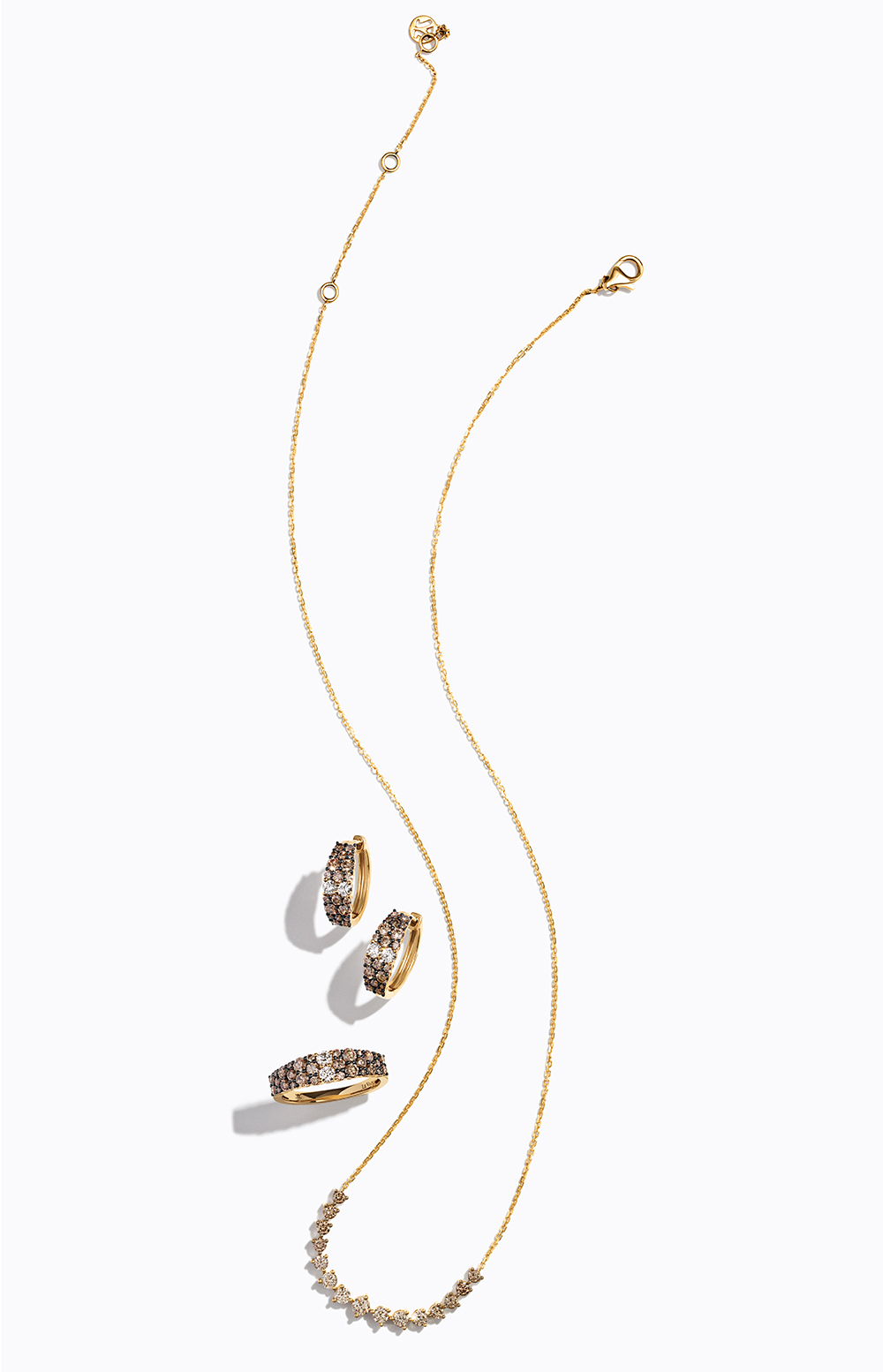
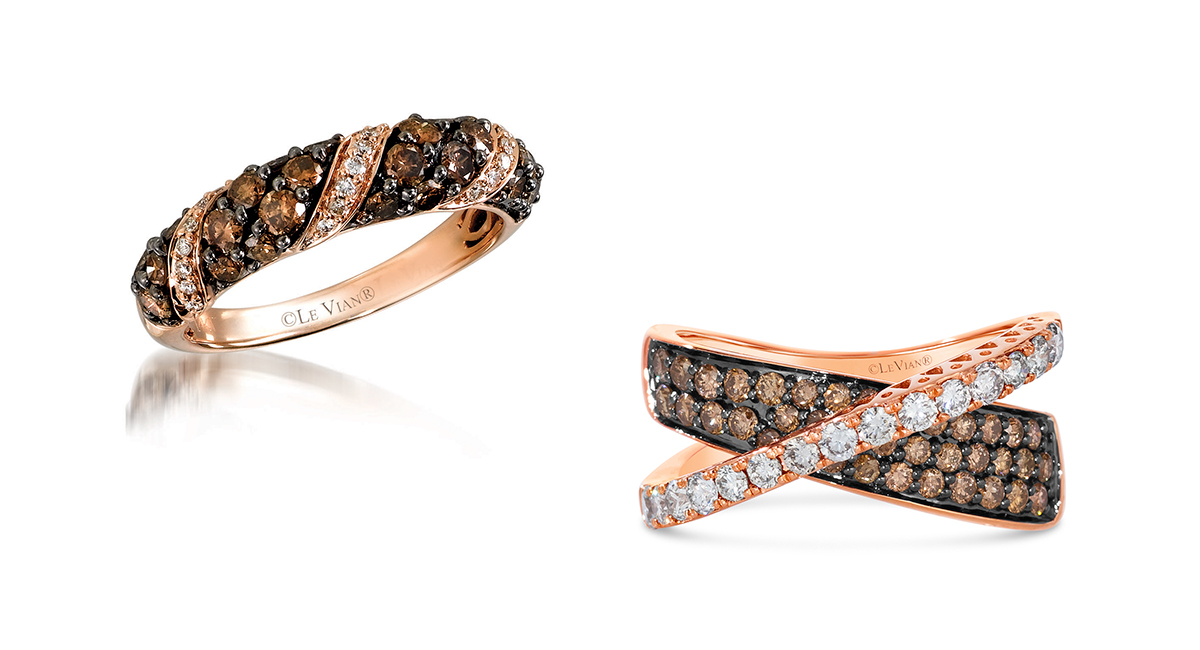
It’s been a quarter century since Le Vian debuted its signature Chocolate Diamonds—the jeweler’s trademarked take on natural fancy color brown diamonds—and over that time the brand has fundamentally reshaped the way consumers see, feel, and shop a category once relegated to the margins.
“Twenty-five years ago, we recognized that natural fancy brown diamonds held a powerful story waiting to be told,” Eddie LeVian, CEO of the storied family jeweler, tells JCK. “They had depth, sensuality, and rarity, but they needed the right narrative to unlock their potential.”
Who could have guessed that a beloved member of JCK magazine’s own team would influence precisely how that story was told? “There was a JCK sales director named Bill Furman who became a friend, and he would come over to chat about life and love as I had just lost my father, and his wife was battling an illness,” LeVian recalls. “He had a passion for artisanal chocolate and would bring handmade chocolates from a store down the block—he taught me all about its qualities,” he says.
“After our father passed away in 2000, we wanted to reinvent the world of fine jewelry and bring trend and fashion and beauty and rarity into the mainstream of the industry,” LeVian adds.
The LeVians’ timing was fortuitous. In the early 1990s, a massive deposit of mostly brown diamonds was discovered at the Argyle mine in Western Australia. When they learned that the mine’s natural fancy color brown diamonds were being lumped together with its massive volume of various shades of brown, “our family set out to bring the natural color diamonds to market,” LeVian says. “We wanted to name them so they wouldn’t get mixed in with the other, lesser qualities. That’s when we made the connection to chocolate—the passion and addiction qualities were the same with our brown diamonds.”
What’s in a Name?
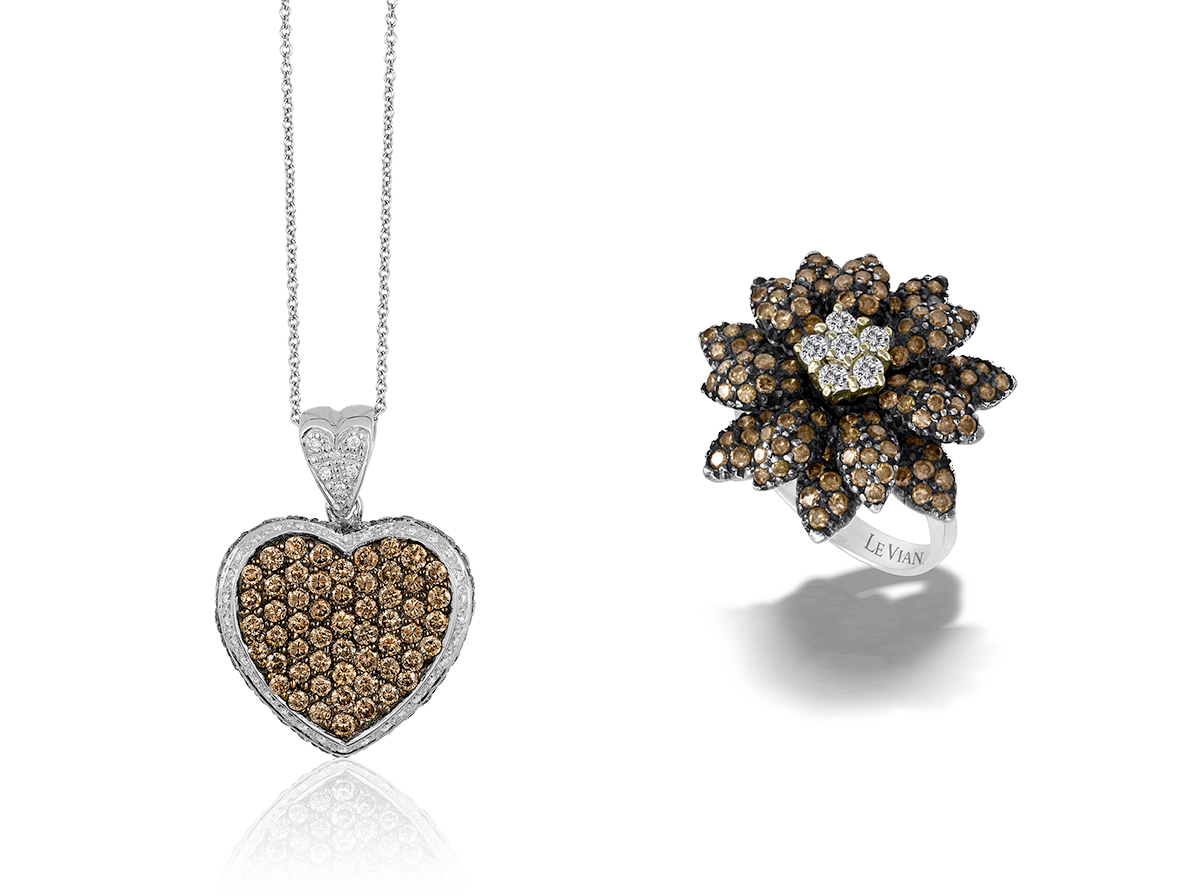
Before the brand spotted their potential, however, brown diamonds—better known by their more intoxicating names, champagnes and cognacs—were considered by retailers to be inferior stones and downright undesirable. Le Vian’s campaign marked a turning point in the conversation about off-color diamonds, where both retailer and consumer opinion started to change. The shift was gradual—at first, the Chocolate Diamonds were often paired with colorless stones, what it branded Vanilla Diamonds, in styles featuring a harmonious brown-and-white blend that was easier to sell.
Eddie LeVian sensed that Chocolate Diamonds could serve as a gateway for shoppers to discover the wider world of fancy color diamonds. “I also saw them as a way to take fine jewelry out of a sea of sameness and use the warmer tones to combine with Strawberry Gold and Raspberry Rhodolites and reinvent the world of jewelry into something more unique that a woman could wear every day.”
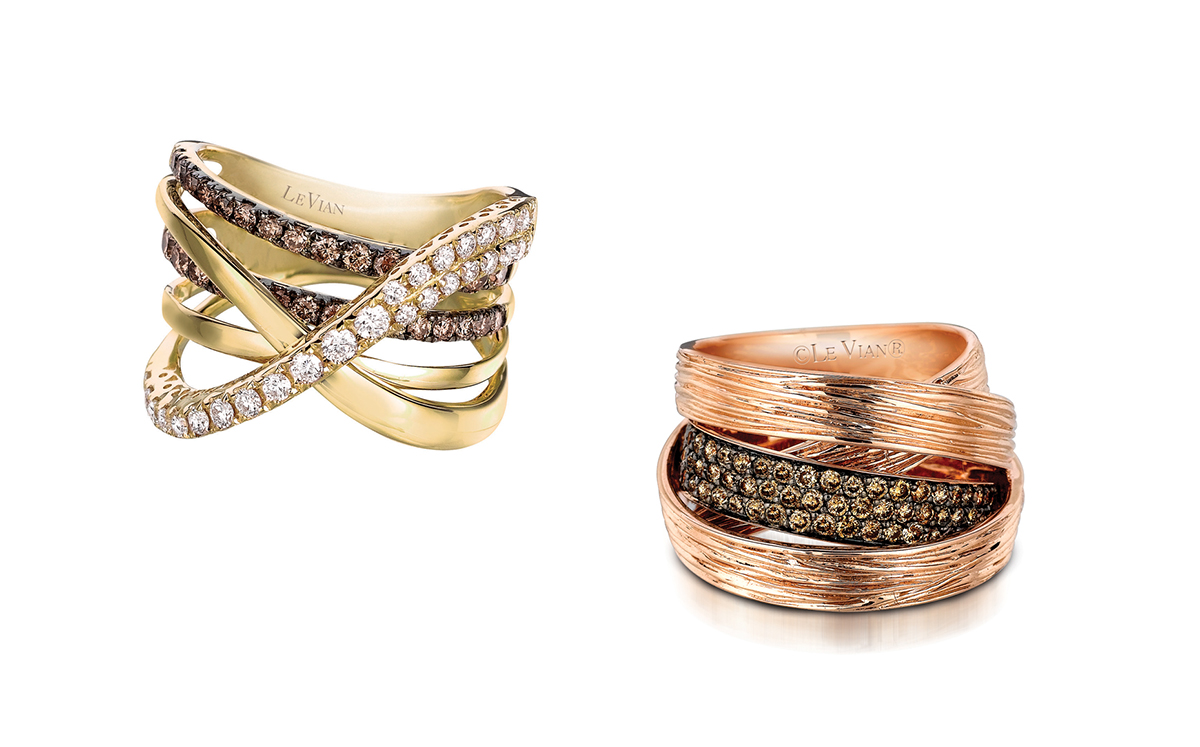
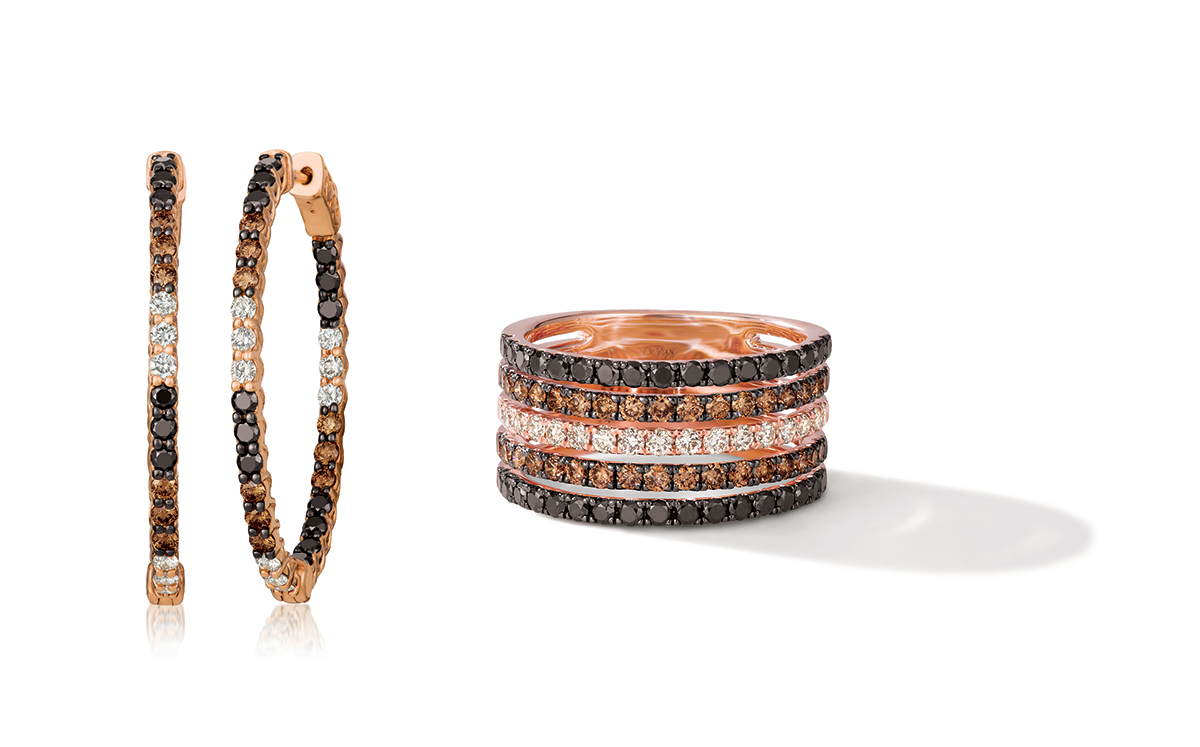
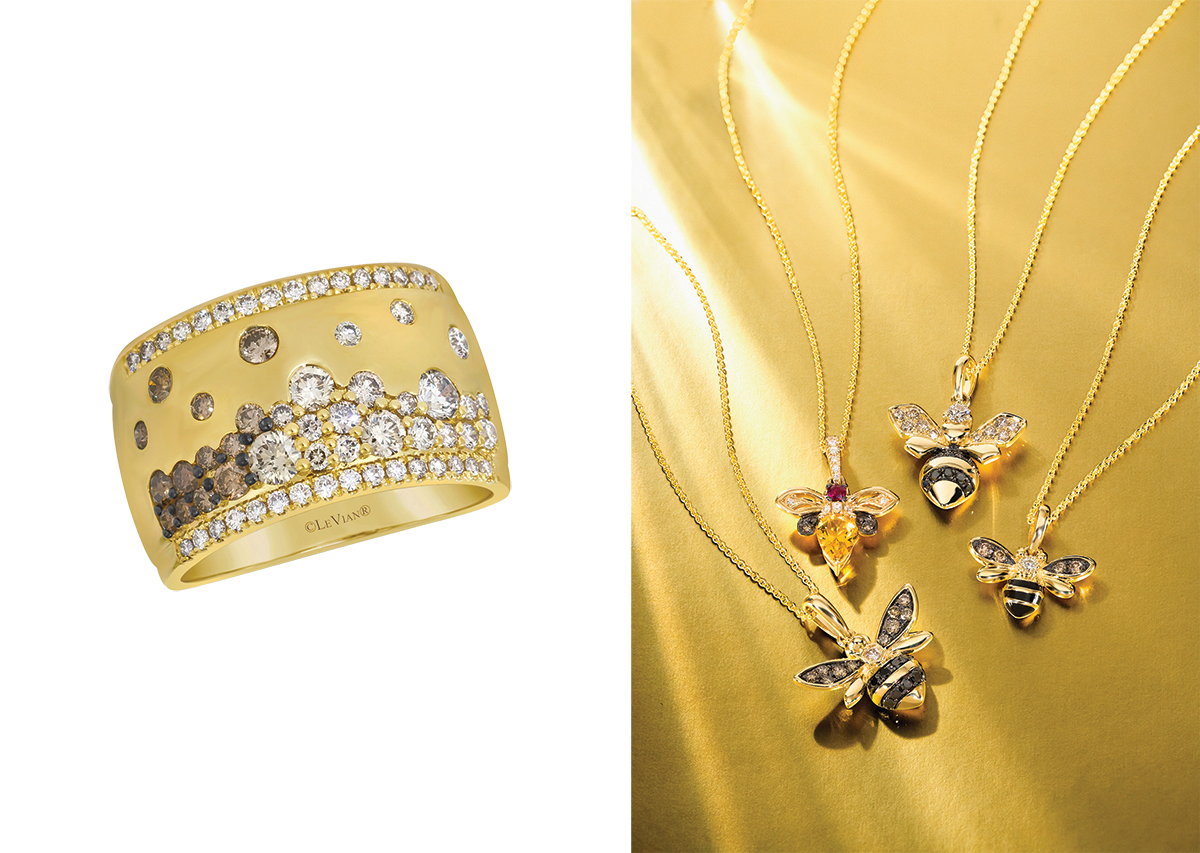
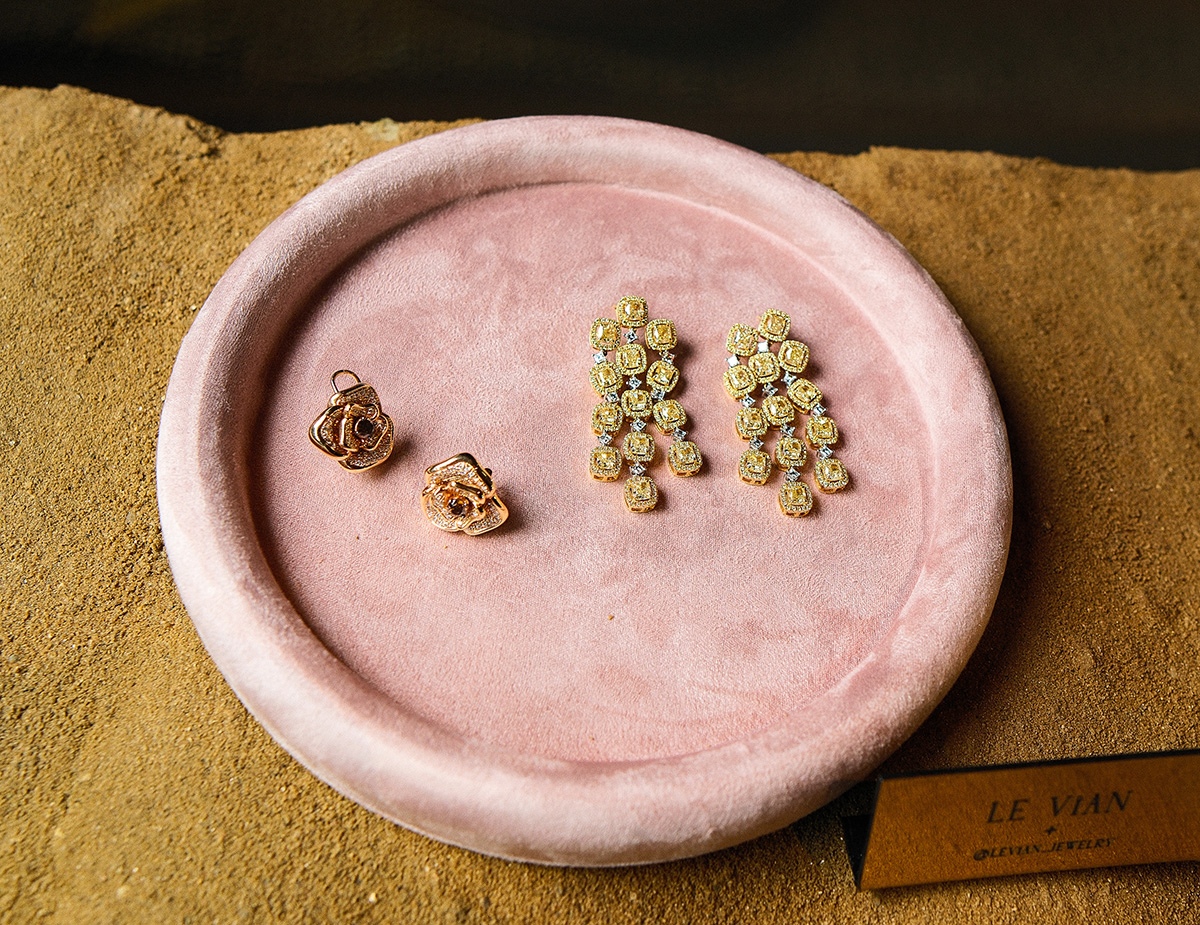
The evolution of how the brand designs around the gems has helped brown diamonds step out on their own. Today, Le Vian showcases them in solitaires, clusters, and ombré arrangements, most notably in its Desert Ombré collection, a new collaboration with Kay Jewelers. The line spans seven hues of brown diamonds—from the light rose-beige of Nude Diamonds to the caramelized glow of Crème Brulée Diamonds—inviting consumers to appreciate the full spectrum of natural color browns.
The Brown Butterfly Effect
While consumers might appreciate that spectrum of color in their jewelry, it’s about more than just a pretty look. The nuances of color help distinguish natural brown diamonds from the sea of same-looking colorless lab-grown diamonds that have flooded the jewelry market over the past decade. What might be “off-color” to consumers seeking the uniformity of a D-grade diamond—natural or lab-grown—is, for others, precisely the reason they want it: The stone speaks to them in a way that has nothing to do with pedigreed grading papers.
“There’s a shift happening—one that celebrates the authenticity of natural diamonds and reframes their value through the lens of rarity, origin, and nature’s artistry,” says Stephanie Lawler, vice president of merchandising for Signet Jewelers, parent of Kay Jewelers. “These initiatives are reintroducing Chocolate Diamonds as not only an alternative to white diamonds, but a category with its own story and sophistication.”
That shift is being accelerated by arguably the biggest name in diamonds: De Beers. The Desert diamonds campaign, the company’s first major marketing push in over a decade, has splashed this fall across broadcast TV, billboards, glossy magazines, and social feeds, prompting both the industry and its customers to see natural brown diamonds in a new light.
“We wanted to create an idea that was fresh, new, and innovative in natural diamonds—this is difficult to do in a category which is classic and timeless,” says Sally Morrison, natural diamonds market lead for De Beers. “At first we looked at design, but it became clear quite quickly that we had to go back to the innate qualities of the diamond itself. What is important to understand is that this idea is using the color palette of Desert diamonds as a metaphor for ‘natural.’ The fact that diamonds come in many forms and colors, and those colors are connected to their origin story—the earth—is the bridge that allows us to talk about natural diamonds.”
For Le Vian, whose storytelling set the foundation for shoppers’ appreciation of brown diamonds, the campaign is validating. “After 25 years of nurturing and growing this category, we were genuinely thrilled to see De Beers debut its campaign spotlighting natural color diamonds in desert-inspired hues,” Eddie LeVian says. “When we spoke with their team about the ‘why,’ they shared thoughtful research showing that consumers continue to associate these tones with authenticity and emotional resonance across demographics.”
That broad resonance is what made the Desert diamonds concept so compelling, Morrison adds. “In focus groups, it appealed to an extremely broad demographic of consumers,” she says. “We tested women and men, multiple age groups [in the categories of] gifting, self-purchase, and bridal. For nearly every group except the 50-plus cohort, this was an entirely new idea—people were generally not aware of colored diamonds.”
Enthusiasm on the part of clients is being amplified by designers who are exploring brown diamonds through their own aesthetics. Randi Molofsky, founder of brand development agency For Future Reference, sees momentum in both fashion and bridal. “One of our brands, Jade Ruzzo, snow-sets a mix of brown diamond shades in many pieces in her collection, and they feel both luxurious and unique. Another designer, Vanessa Fernández, often uses off-color diamonds in her signature Curva solitaire rings. When paired with yellow gold, they offer a gorgeous take on a monochromatic style that feels ultra-chic.”
Molofsky also notes that the use of more antique brown diamonds is appealing to shoppers. “The chunkiness of the cuts, the less brilliant and more sparkly glow, the vintage feel. I think this plays well with off-color diamonds, because it all feels a little ‘heirloom’ in the best way.”
For jewelry lovers, this expanding palette simply means more choice. “Le Vian has been in this game for a long time, so they have made an impact on consumer education of brown diamonds,” Molofsky says. “But I think by changing the language and vibe around the category—using terms like warm tones or setting the stones in chunky yellow gold—you create something that feels more organic and less branded.”
The results of these combined efforts—Le Vian’s legacy, Kay’s reach, De Beers’ megaphone, and designers’ fresh interpretations—have the makings of a major market surge.
Lawler already sees a diverse consumer reaction to the stones. “Younger shoppers are drawn to the statement-making nature of Chocolate Diamonds, using them to express their personal style with something different,” she says. “More established customers often see them as a sophisticated, standout addition to their collection—something that feels truly unique, especially as lab-grown diamonds become more common.”
And, she adds, “while some consumers view these stones as an accessible entry point to natural diamonds, others pick them specifically to showcase the beauty of nature’s work. Many of these purchases are self-driven, though they are becoming increasingly popular for gifting and engagement pieces.”
As the buzz persists, retailers can feel confident taking stock of a wide array of browns in 2026—across shades, shapes, and sizes.
“I think the palette will continue to grow in popularity,” Molofsky says. “The lighter champagnes are the sweet spot, but I think we’ll see customers start veering even darker, the more accepted browns become. The more unique the color, the less they will look like a lab diamond.”