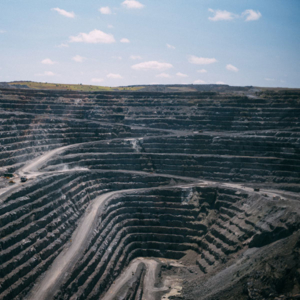
Anglo American is nearing the end of its efforts to sell De Beers, Anglo CEO Duncan Wanblad said in a television interview on Thursday, though he would not name the likely winning bidder.
“We’re very much at the final stages of the divestment process of the De Beers business, which of course has been very much complicated by the fact that the diamond markets have been so very much challenging over the last couple of years,” Wanblad told CNBC, following release of Anglo’s first-half financial report.
“We are hopeful that we will be able to ink that deal…between now and the end of the year,” Wanblad commented, saying that “very good progress” has been made on the De Beers sale.
Pressed on whether the so-called Global Diamond Consortium led by former De Beers CEO Gareth Penny would be De Beers’ new owner, Wanblad replied, “We are not exclusive with anybody at this particular stage. We are in the final rounds of negotiations with our counterparties on this thing.”
Bloomberg had reported on Wednesday that Anglo American is in advanced talks to sell its majority stake in De Beers to Penny’s Global Diamond Consortium for $1 billion.
The CNBC interviewer also mentioned the huge difference between what Anglo American paid for De Beers and what De Beers is valued at now. “The business is very much shaped by the markets within which it operates,” Wanblad responded. “The industry is reshaping itself to deal with [the impact of lab-grown diamonds], and despite that, there is a very lucrative and viable business that will come out of this as a result of the reshaping.”
De Beers was valued at $2.3 billion at the end of 2025, the third year in a row Anglo wrote down its value. Anglo had paid nearly $13 billion when it bought out the Oppenheimer stake in De Beers in 2011.
According to Anglo’s half-year report, De Beers’ revenue totaled $1.6 billion in the first six months of 2026, compared with $2 billion revenue for the first half of 2025. Anglo said the decline was driven by a drop in rough diamond sales, from $1.7 billion to $1.3 billion.
The six-month report also showed that De Beers reduced its EBITDA loss 40% year-over-year, to $113 million in 2026. That improvement “was primarily attributable to the transition from trading losses in the prior period to trading profits in the current period, supported by lower operating costs,” Anglo said.
De Beers’ first-half rough diamond production increased 46% to 14.9 million carats, versus 10.2 million carats in the same period last year. But “rough diamond trading conditions remained challenging,” said Anglo.
“Consumer confidence and logistics continued to be impacted by geopolitical and macroeconomic instability, compounded by the conflict in the Middle East. While demand for larger, higher-quality natural diamonds remained resilient, smaller and lower-quality diamonds continued to face pricing pressure from the impact of synthetic lab-grown diamonds,” it said.
At the retail level, global sales of finished diamond jewelry were stable year-over-year. “There were encouraging consumer demand signals in the United States, where natural diamond jewelry sales returned to growth among independent jewelers,” Anglo reported. “Demand in India remained robust; however, demand overall in mainland China continued to decline.”
On an earnings call with media and analysts today, Wanblad said of the De Beers sale: “The team there has been working incredibly hard in a terribly complex environment over the last few years to achieve a responsible separation of that business. I am pleased to say that things are advancing…. We are now in the final phases of our process.
“That also is the most challenging phase of our process, given the number of parties that we need to take along to the final point and get signing of the final agreements,” he said. “Our focus remains on bringing this process to a conclusion within an acceptable terms during the second half of this year.”
CFO John Amaral said on the call that Anglo American is taking “proactive action” to preserve De Beers’ overall value. “Although the losses have been stemmed, we’re not resting, and restructuring action continues while ensuring that we retain upside optionality as markets recover,” he said.
“The most significant action is at Venetia, where production will be paused for around two years and capital expenditure on the underground project will be rephased.”
Amaral also noted that De Beers is simplifying its corporate structure and reducing the central cost base, building on progress the company had already made to lower overhead costs and improve efficiency.
“Overall, these actions demonstrate a clear emphasis on cash preservation, cost reduction, and value protection, while also setting the business up for a successful divestment,” Amaral said.
Top: De Beers’ Venetia mine in South Africa (Photo courtesy of De Beers)
- Subscribe to the JCK News Daily
- Subscribe to the JCK Special Report
- Follow JCK on Instagram: @jckmagazine
- Follow JCK on X: @jckmagazine
- Follow JCK on Facebook: @jckmagazine