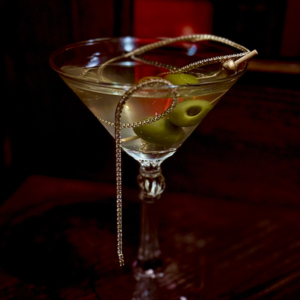

They’re sorry for being so awesome.
Jewelry companies, primarily in India, have eagerly embraced a new trend where brands turn the standard business apology letter—typically a dreary document suffused with legally approved corporate-speak—into a tongue-in-cheek marketing tool.
Though the trend reportedly began in the Philippines, it seems to have gathered steam when a Volkswagen dealership in Mumbai went viral with a statement that apologized for making owning a Volkswagen “irresistible.”
After that, other retailers and brands, including several India-based jewelry companies, put up posts along the same lines.
Fake apologies have “taken over social media feeds, blending corporate sincerity with playful humor,” wrote India’s Economic Times, which said they make “brands appear self-aware and human, offering a refreshing break from traditional advertising.”
The trend is particularly prevalent on Instagram. The Indian branch of the Natural Diamond Council apologized that mined gems make “everything else look a little less brilliant.” Caratly posted that it was “sorry your old jewelry now feels a little too ordinary.” C. Krishniah Chetty & Sons’ “official apology” lamented that wearers were experiencing “a noticeable rise in selfies, compliments, and requests for ‘just one more look.’” And Jewelbox expressed regret that its customers’ friends were “constantly asking, ‘Where did you get that?’”
But business-to-business companies are offering fake mea culpas too.
“We apologize if our work has caused unplanned moments of happiness, long mirror glances, or unexpected admiration from strangers,” posted Hari Krishna Exports on LinkedIn. “We understand such feelings can be distracting, especially when they come from something as simple as light meeting diamond.”
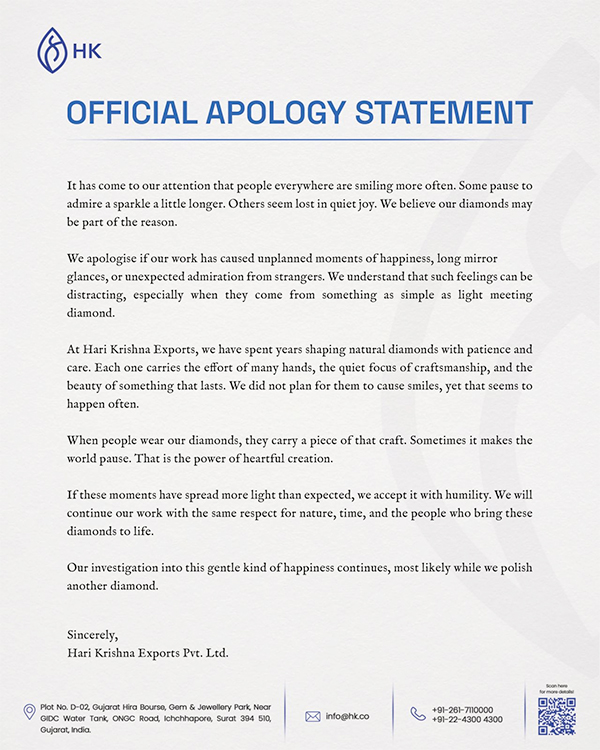
As amusing as the public seems to be finding this—at least until the trend burns itself out—India’s Medianews4u warned there’s a risk if certain companies join in.
“The joke works best when it feels authentic,” the news site said. “For brands with real service issues or trust deficits, using the apology trope for humor could easily backfire.”
(Photo: Getty Images)
- Subscribe to the JCK News Daily
- Subscribe to the JCK Special Report
- Follow JCK on Instagram: @jckmagazine
- Follow JCK on X: @jckmagazine
- Follow JCK on Facebook: @jckmagazine