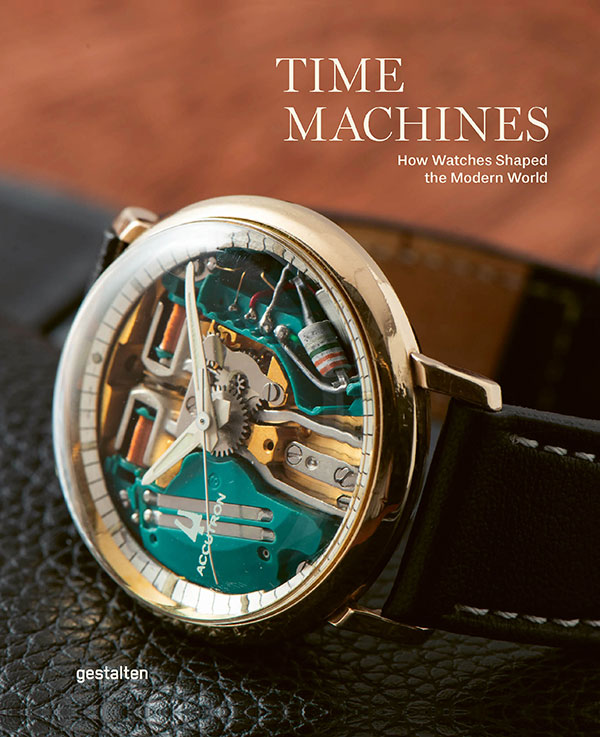
What makes Time Machines: How Watches Shaped the Modern World a must-read for any watch lover is its massive collection of pictures, along with important historical context, of the 100 most influential watches since 1900.
This is a book that watch fans and collectors will return to time and again for its compelling storytelling—from the Cartier Santos-Dumont’s impact on aviation to the Rolex Submariner’s role in creating dive culture.
Time Machines editors Blake Z. Rong and Sean Paul Lorentzen also included advertisements and other artifacts to show how these timepieces fit into culture, fashion, and identity. You learn who wore what watch when they walked on the moon or scaled Mount Everest.
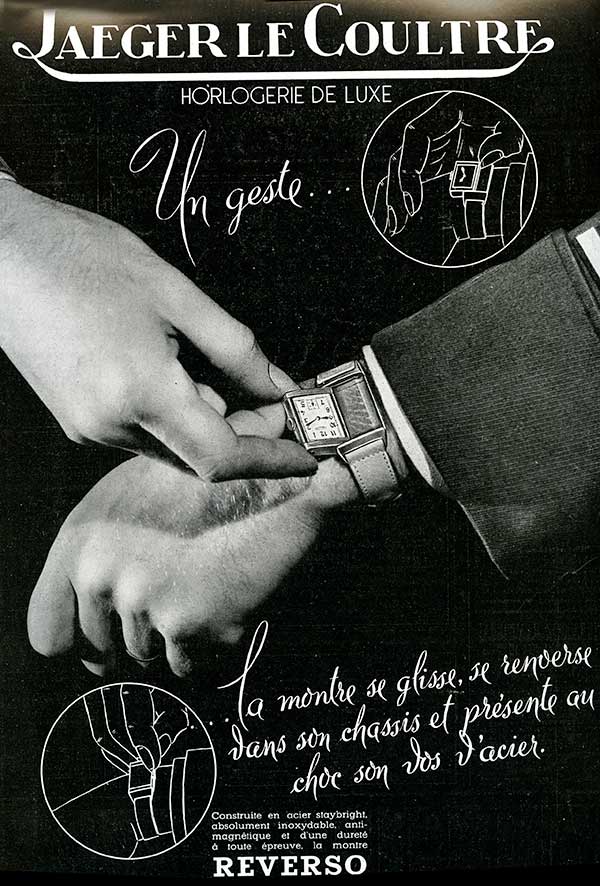
“This book is a history of the watch from both its functional and decorative origins, and we approach it from an angle that explains the allure of some of the most popular watches today,” Rong says. “The Rolex Submariner and GMT-Master, Omega Seamaster, and Jaeger-LeCoultre Reverso are not just wildly collected today, but they all have roots in function over form in many unexpected ways.”
Gestalten, the German publisher of Time Machines, released the book in the U.K. and European Union on Sept. 25. It will be available for U.S. customers on Nov. 11. The 320-page hardcover has more than 300 full-color photographs and is priced at $90.
Rong, a Brooklyn-based journalist whose previous work for Gestalten includes Beautiful Machines: The Era of the Elegant Sports Car and The Italians–Beautiful Machines, thinks of Time Machines as a passion project but also a reference that could serve as a celebration of horology’s global legacy. Research for the book was a huge undertaking, Rong says, but he and Lorentzen agreed it was worth their time.
“Sean and I conceived of this project because we wanted to recognize how the seemingly humble wristwatch has played such a pivotal role—and in many cases, lifesaving roles—in every endeavor through the 20th and 21st centuries,” says Rong.
“It includes everything from aviation to trench warfare, from human spaceflight and the moon landing to haute couture and pushing technological boundaries—such as the advent of quartz and the resurgence of mechanical timepieces.”
There are thousands of watches that could have been in the book—the fun, according to Rong, was deciding which of them were the most essential. Time Machines starts with the Hamilton pocket watch, moves into the Cartier Tank and the Rolex Oyster, goes to war with the Breitling Navitimer, waves its way into luxury goods with the Patek Philippe Nautilus and Piaget Polo, and adds a bit of whimsy with Swatch and microbrands such as the C1 Bel Canto.
“We narrowed down our list of watches to ones that accompanied these great historical impacts: the watches that Jacques Cousteau and other pioneering divers wore to bring the ocean depths to a world audience, the watches that built Formula 1 and its drivers into a global phenomenon, and the chronographs selected by NASA and individual space explorers,” Rong explains.
“In so many cases, we found that watchmaking innovation from diverse brands around the world were instrumental in high-stress situations and therefore needed to be honed in order to push the envelope on precision,” he adds. “Seiko, for example, achieved shocking results against the Swiss establishment in the 1960s, driving innovation across the entire field.”
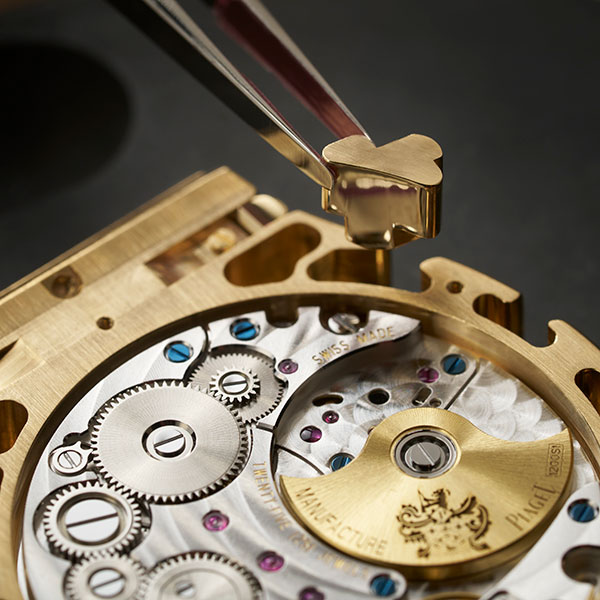
Top: The Piaget Polo, featured in the new book Time Machines: How Watches Shaped the Modern World, has one of the thinnest automatic movements in the world. (Photos courtesy of Gestalten)
- Subscribe to the JCK News Daily
- Subscribe to the JCK Special Report
- Follow JCK on Instagram: @jckmagazine
- Follow JCK on X: @jckmagazine
- Follow JCK on Facebook: @jckmagazine