The “tea” surrounding designer Marla Aaron’s recently announced collaboration with Nymphenburg, the prestigious Munich-based porcelain manufacturer, is a compelling blend of vision, experimentation, artistry—and a dash of daring.
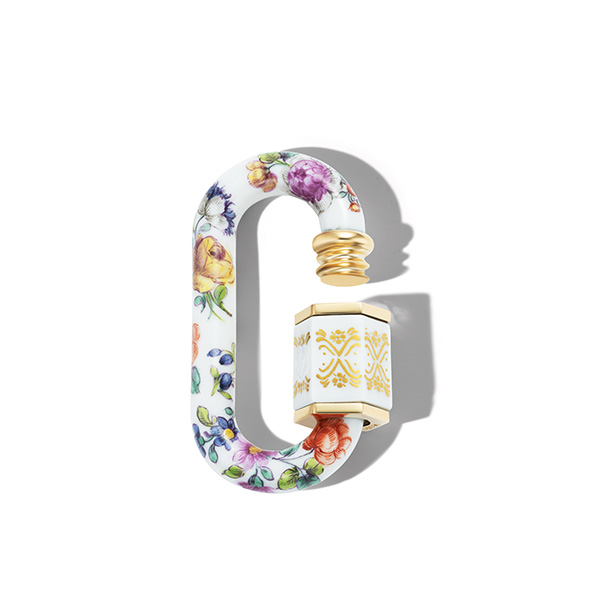
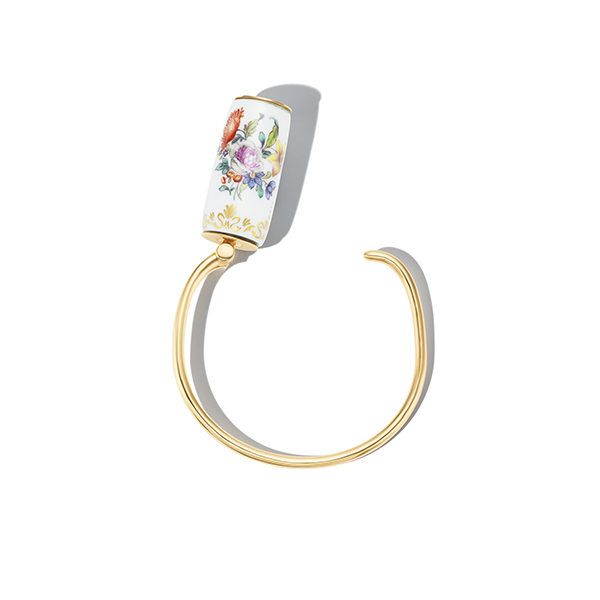
Set to launch at Bergdorf Goodman on Oct. 1, the four-piece collection pairs Aaron’s signature concepts and components with aesthetic traditions of the 18th century. The collab is anchored by one of the jewelry designer’s famous carabiner-inspired locks (pictured at top), made of porcelain and hand-painted in Nymphenburg’s iconic Cumberland pattern.
Aaron, an award-winning, New York–based designer known for her innumerable, collectible iterations of carabiner-style locks and pendants, has become such a jewelry community mainstay that few in the industry may be aware she worked as a marketing executive before starting her line in 2012.
In the early 2000s, when she was marketing director of the now-closed luxury travel and style magazine Departures, Aaron had her first encounter with Nymphenburg—and was instantly fascinated by the brand’s history.
“I love porcelain, I love setting a table, and I love very elaborate patterns,” Aaron tells JCK during our recent visit to her studio. “Even in our own office, we have a Spode zoological pattern on hand.”
She also appreciates the history of porcelain, which was revered as one of the most valuable and sought-after luxury goods in the 17th and 18th centuries. (Porcelain dinnerware and vessels dating from that era now have prominence in the decorative arts holdings of museums like the Frick in New York.)
The Nymphenburg porcelain factory was founded in 1747 by Elector Maximilian III Joseph, a member of the Bavarian royal house of Wittelsbach. It quickly became known in Europe and beyond as a premier producer of fine porcelain rendered in the rococo style. Today, a single teacup in the Cumberland pattern costs around $7,000; a full dinner service could cost more than $300,000.
The dialogue between Nymphenburg and Aaron blossomed in 2017, the jewelry designer tells us. “I sent an email to the company’s ‘Contact us’ email address explaining who I was and that I wanted to make something—I didn’t exactly know what at the time,” Aaron says.
The idea began to shape in earnest during her visit to Munich’s Nymphenburg Palace in 2022. There, Aaron encountered the intricate hand-painted Cumberland pattern while touring the manufacturer’s “simply extraordinary” archives. She wondered: Could the pattern translate into wearable porcelain jewelry? It was a bold challenge readily embraced by both collaborators.
The Cumberland pattern was created in 1765 by Joseph Zachenberger, a master flower painter at Nymphenburg. Featuring colorful bouquets, butterflies, and insects, all surrounded by lacy gold flourishes, it made its debut on a dinner service commissioned by the Province of Hanover for the wedding of Ernst August, duke of Brunswick and Lüneburg, who was the son of the last duke of Cumberland—hence the name.
Now that beloved pattern decorates four Marla Aaron designs. In addition to the lock, there are a trundle lock bracelet, a detachable earring charm, and a “Depository” (jewelry holder) detailed with a single blossom.
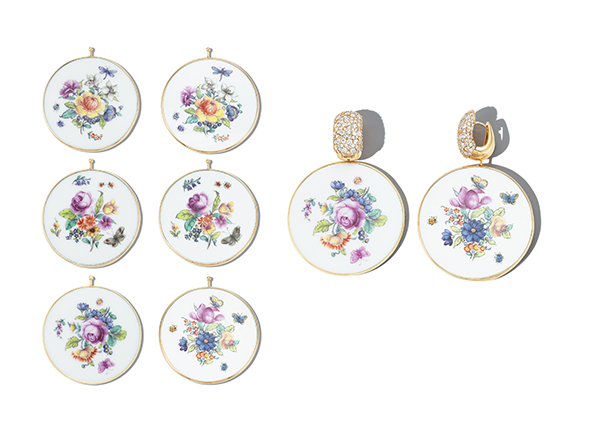
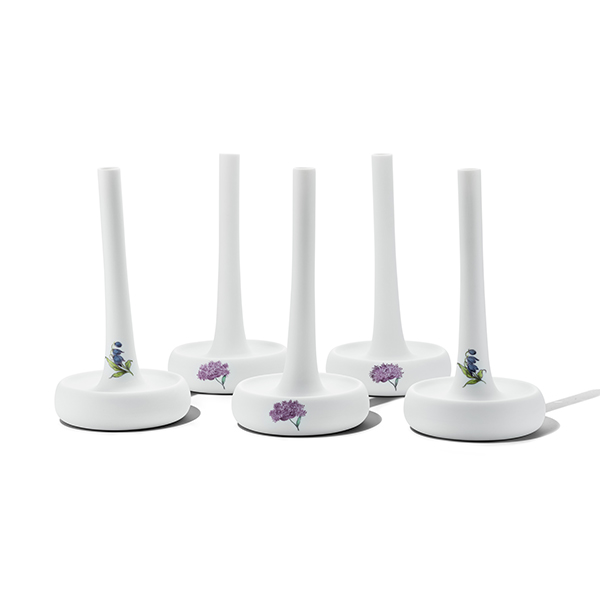
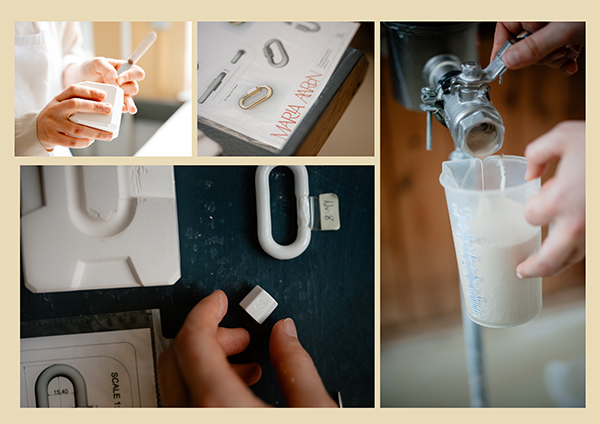
For three years, Aaron worked with the master artisans at Nymphenburg to finalize the jewelry forms and discuss and refine the molds that would be used to produce them in porcelain. Frequent video calls allowed the two parties to work closely and collaboratively throughout the process, until they were both satisfied with the shapes, scale, and functionality.
Aaron has long had an affinity for using unconventional materials such as rubber, Dyneema fiber, and fordite in her work. The porcelain pieces relate to that tradition, but also carry significantly more gravitas.
As each piece is being produced in limited editions of 10, the Marla Aaron x Nymphenburg line is intended to be highly collectible.
“Handmade, hand-painted porcelain is a rarefied craft, and I think when things are too rarefied, they will disappear,” says Aaron. Turning porcelain into jewelry, she adds, exposes the art form to a larger audience—and will hopefully inspire a new appreciation for it: “I think that is very special.”
Top: In porcelain and 18k gold, Marla Aaron’s signature lock clasp/ornament becomes a precious handmade piece ($16,000).
Follow me on Instagram: @aelliott718
- Subscribe to the JCK News Daily
- Subscribe to the JCK Special Report
- Follow JCK on Instagram: @jckmagazine
- Follow JCK on X: @jckmagazine
- Follow JCK on Facebook: @jckmagazine