If you know or follow me, you’ll understand why M.S. Rau’s “suffragette jewelry”—consisting of three very special recent acquisitions—is compelling to me. Suffice to say that one reason has to do with recent headlines.
Another reason is that we’re coming up on Women’s Equality Day, which commemorates the adoption of the 19th amendment to the U.S. Constitution on Aug. 26, 1920. Between the anniversary of this historic moment and the deeply horrific portent of that other thing I mentioned, a quick review of the history of women’s suffrage seems in order. (Spoiler: None of it is as pretty as the jewelry.)
What is suffragette jewelry? It has British origins, actually. A burgeoning women’s suffrage movement was making waves in the U.K. in the early 20th century, just as plenty of women were concurrently organizing Stateside (hat tip: Carrie Chapman Catt, Susan B. Anthony, Alice Stone Blackwell, and many others). In 1903, Emmeline Pankhurst, one of the most prominent suffragists in Britain, gathered women of the upper-middle classes to form the British Women’s Social and Political Union, or WSPU. (The “Votes for Women” slogan? The one that appeared on sashes then and emblazons election-season merch in the present day? That was them.)
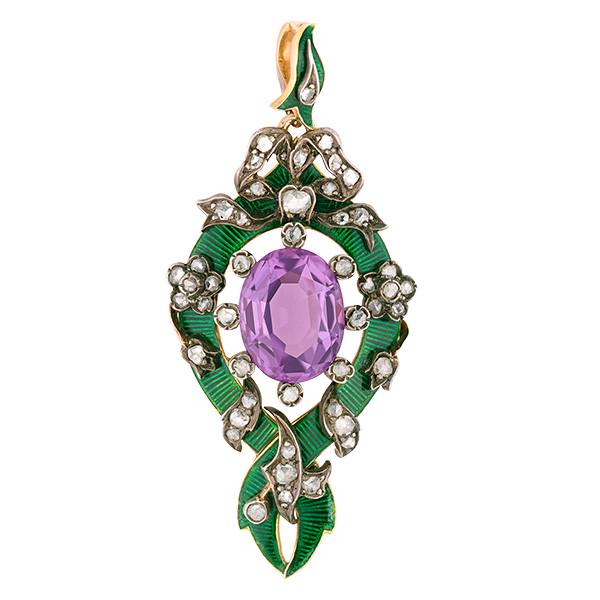
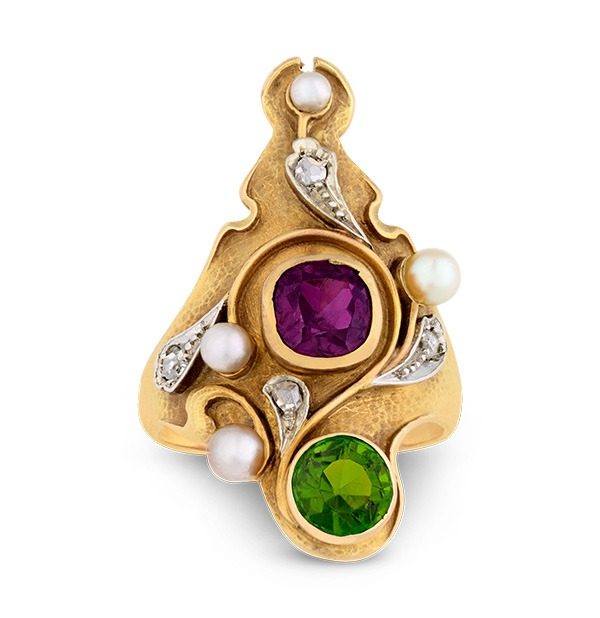
The colors representing this political movement were green, white, and violet, to symbolize the party’s core message: green = “give,” white = “women,” violet = “votes”… Give women votes! The colors appeared in clothing—and in suffragette jewelry, often containing peridot, pearls, and amethyst.
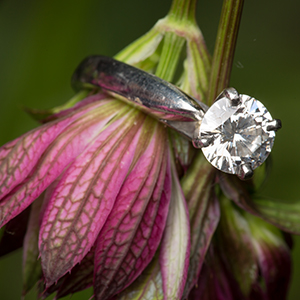
These gemstones show up in the pieces offered by M.S. Rau (two pendants and a ring), which also use enamel for green, diamonds for white, and garnet for purple.
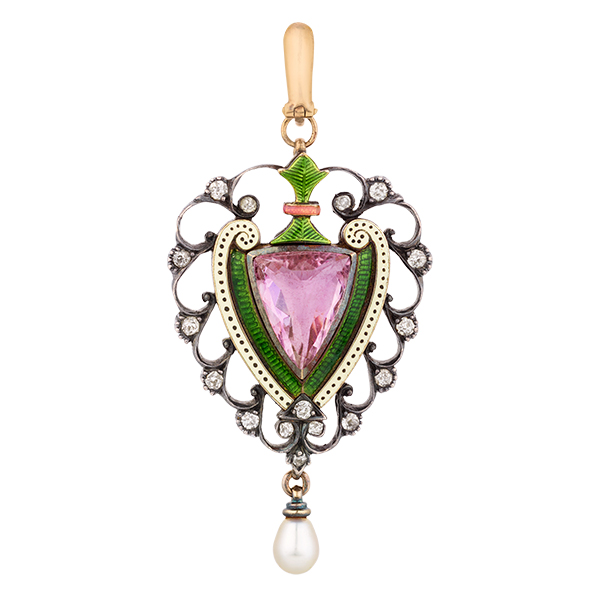
“What’s fascinating about suffragette jewelry is how accessible it was,” says Bill Rau, president of M.S. Rau, which is based in the French Quarter of New Orleans. “You could buy simple pieces at benefit fairs or elaborate designs with amethysts, pearls, and peridots if you had the means. The colors weren’t random either: purple for dignity, white for purity, green for hope. Women wore these pieces to massive rallies as their badges of solidarity.”
The WSPU suffragists favored an offensive strategy: Heckling lawmakers, organizing marches and rallies, smashing windows, and throwing rocks furthered their cause in a way that disrupted the status quo and drew attention to their campaign for equal voting rights. In the press coverage of their protests, participants in the movement were dubbed “suffragettes.” It was a nickname promptly adopted by the American press as well.
Meanwhile, as the M.S. Rau jewels suggest, WSPU suffragettes were a fashionable group, partly to offset the common misconception that they were a mob (perhaps a so-called “woke mob”?) of unladylike troublemakers. As the suffragist movement—and the vibrant fine jewelry itself—gained attention (and traction), the successful London-based jeweler Mappin & Webb dedicated its entire 1908 holiday catalog to the popular tricolor baubles.
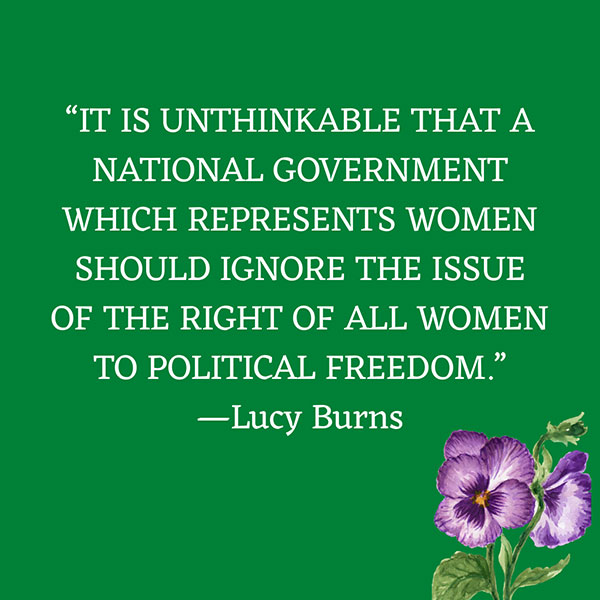
The WSPU’s strategy had a ripple effect. The American suffragist warrior Alice Paul, who connected with Pankhurst and her daughters around 1907 when she was studying in England, joined in the party’s most militant efforts during her stay. Her participation led to multiple arrests, imprisonment, and brutal force-feeding in response to hunger strikes. She met fellow American suffragist Lucy Burns in a London police station where both were being held after their arrests.
Once Paul and Burns returned home, they participated in local suffragist efforts and, in 1916, formed the National Woman’s Party (NWP) to escalate the cause. They followed the lead of their British counterparts in the WSPU, likewise staging demonstrations, picketing, and mounting acts of civil disobedience.
Over a span of three years leading to the passage of the 19th amendment, members of the NWP famously picketed the White House on a daily basis. Led by Paul and Burns, the picketers were known as the “Silent Sentinels,” and many in their ranks were arrested and sent to prison for months at a time. There, they were mentally and physically brutalized and—in response to their hunger strikes—were subjected to force-feeding, a violent act that caused bleeding, broken teeth, and choking.
While there doubtless were many factions of feminist activists participating in the suffragist movement throughout the U.S., some historians credit the NWP’s tactics as the thing that ultimately moved the needle to victory.
I suppose this means we have a playbook to refer to if (when?) the rug gets pulled out from under us more than a hundred years later. At this point I’d say anything is possible. And if it comes that? You bring the signs, I’ll bring the jewels.
Top: Late-19th-century suffragette pendant, by London jeweler Henry Tessier, in 13k yellow gold and silver with green guilloché enamel, oval-cut amethyst, and diamonds, $24,500
- Subscribe to the JCK News Daily
- Subscribe to the JCK Special Report
- Follow JCK on Instagram: @jckmagazine
- Follow JCK on X: @jckmagazine
- Follow JCK on Facebook: @jckmagazine