

We sent a correspondent to the Shoptalk spring retail trade show in Las Vegas to suss out the latest retail technologies. Unsurprisingly, AI earned the lion’s share of attention.
If you haven’t incorporated artificial intelligence (AI) into your retail business, have we got some advice for you.
At the Shoptalk spring retail trade show, at the Mandalay Bay Resort in Las Vegas in late March, exhibitors covering just about every aspect of the retail world, from ideation and marketing to packaging and fulfillment, did their best to seduce attendees. But the No. 1 topic of discussion was, without question, AI.
This came as no surprise. Since the debut of ChatGPT in November 2022, AI in all its forms has dominated headlines in almost every industry. According to a recent report from Grand View Research, the global AI market reached $279.2 billion in 2024, and is expected to hit $1.8 trillion by 2030.
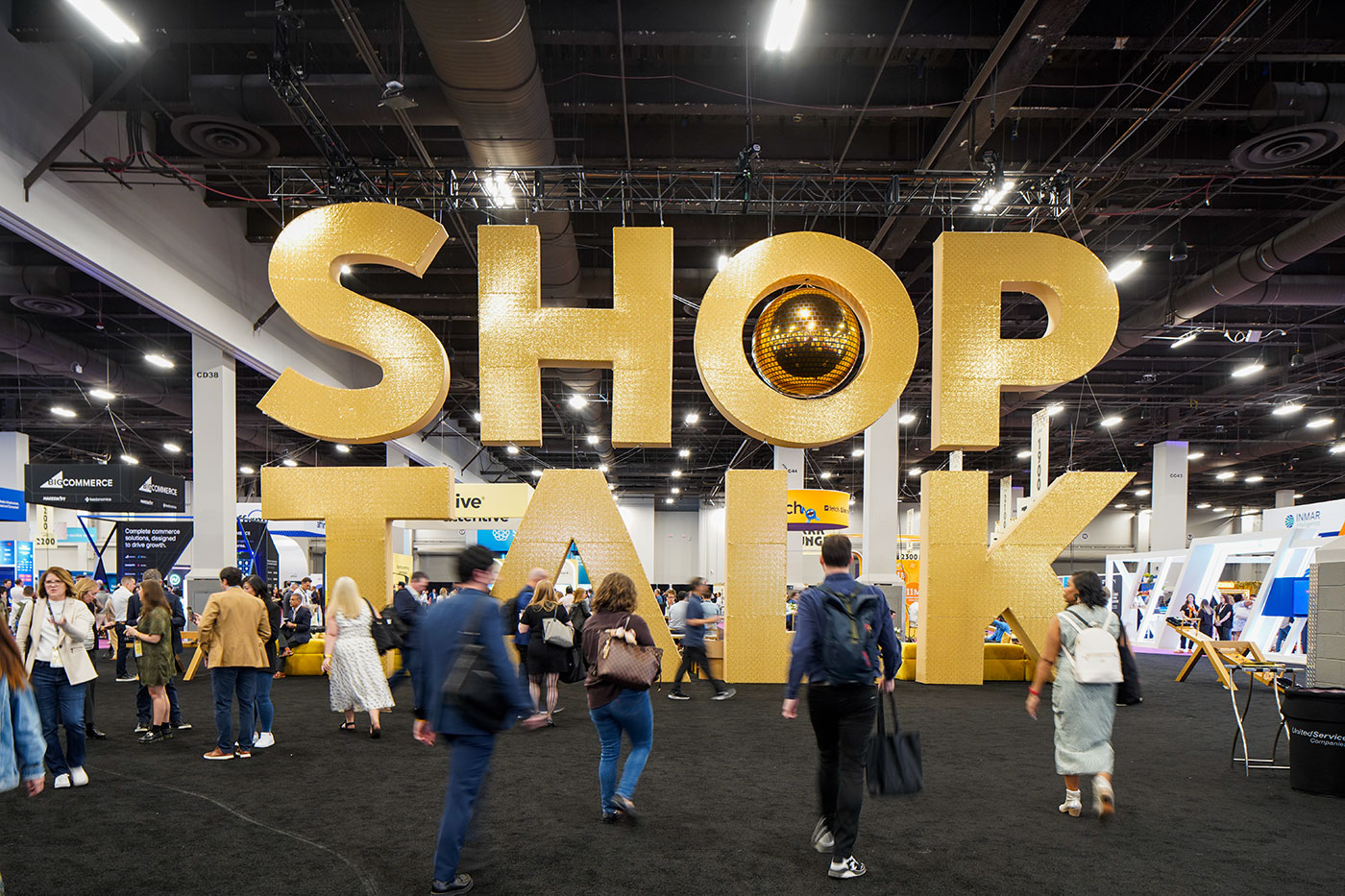
Generative AI, the rapidly growing segment of AI that empowers machines to create original content, has had notable success in the retail industry already. Coresight Research estimates that the global generative AI market will total $125 billion in 2025.
But AI isn’t just for big companies. As several Shoptalk presentations made clear, individual jewelers and small to midsize jewelry companies can embrace the technology, too.
Take Big Sur AI, for example. The company’s AI sales agent can be integrated into a brand or retailer’s website, allowing the technology to guide online shoppers with personalized recommendations based on search history and other metadata.
As cofounder and CEO Vinod Ramachandran notes, the interaction is designed to mimic what customers might experience when they walk into a brick-and-mortar store. “If I go to a small jeweler’s website and I want to buy a diamond necklace, I may not know what color or clarity I’m looking for, and I might need to talk to someone about it,” Ramachandran says. “That’s where AI can come in and guide the user. Any question they have, AI can answer clearly and build purchaser confidence.”
Other companies, such as Arcade AI, are taking the notion of customization and personalization to another level. The company has an AI-powered creation platform that allows users to design and sell custom products. The platform launched with jewelry, meaning anyone can now visit the site with a fantasy or idea that partner jewelers will iterate and execute.
During a session on the first day of the show, Arcade AI cofounder and CEO Mariam Naficy walked attendees through how product creation works on the platform. Querying the technology for a mockup was easy: All Naficy had to do was type an idea into a prompt box and answer a few basic questions. In the real world, once a customer approves a prototype and a price, the partner jeweler receives the order, makes the product to customer specifications, and ships it out like any other custom order.
“This technology bridges the gap between retail and being in the founder community,” says Naficy, who previously founded Minted, an online marketplace of design goods. “There’s no limit to what you can create.”
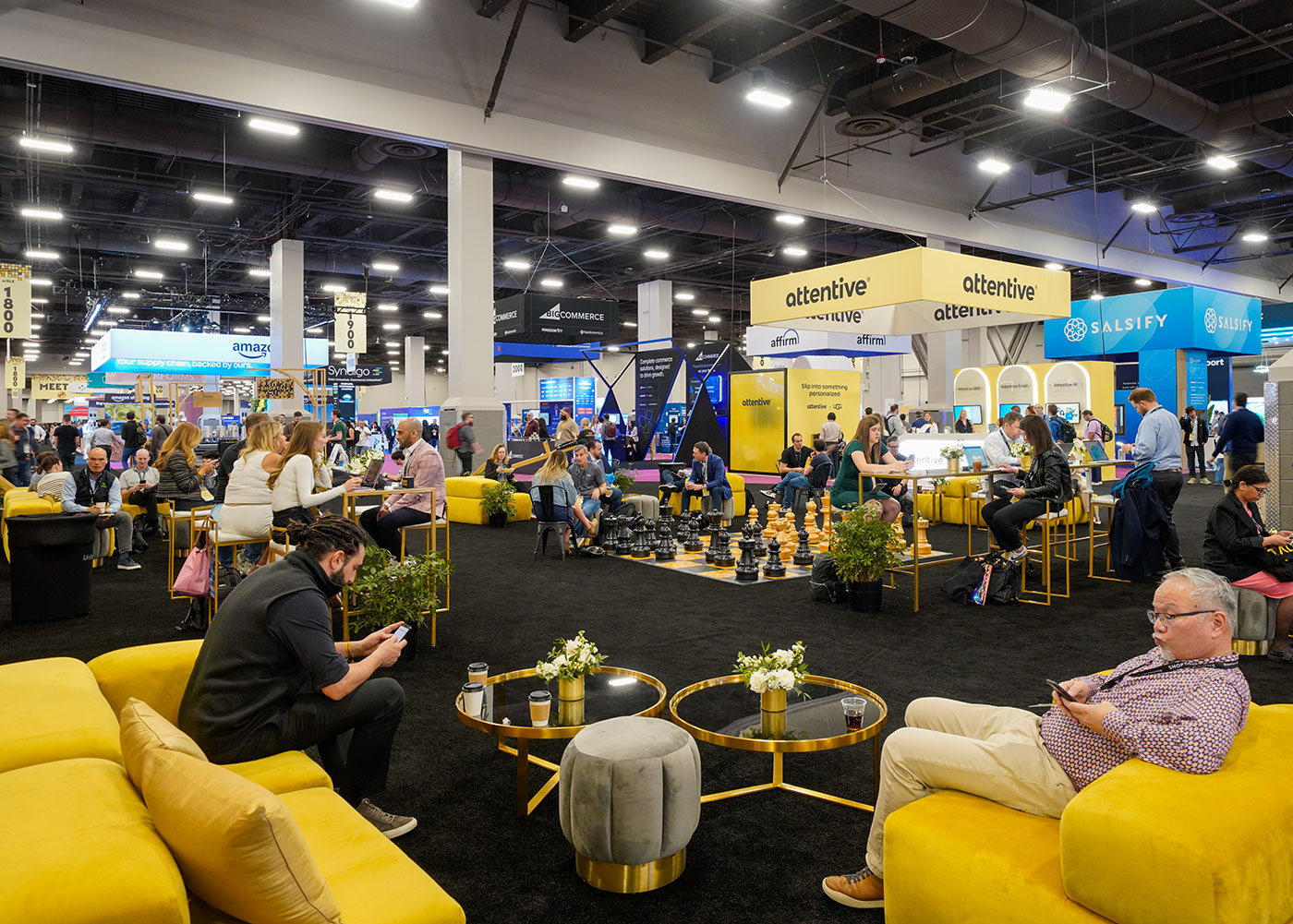
Presentations were only one part of the Shoptalk event. Like most big Las Vegas conventions, the show had an expansive exhibit floor with more than 900 vendors of varying sizes, all strutting their stuff.
Companies leveraging machine learning were front and center. After multiple excursions around the Mandalay Bay Convention Center, this reporter estimated at least 10 to 15% of companies in the exhibit hall were displaying products that featured some form of AI. Most of these products, many priced on a monthly subscription model, easily could be adopted by companies in the jewelry industry.
Lily AI, for instance, uses AI to enrich product content with accurate, relevant, and context-aware attributes, phrases, and descriptions to improve performance where people search and shop.
Spangle AI offers a similar approach, using agentic AI chat technology to create self-optimizing shopping journeys at scale that are contextually relevant, deliver one-to-one interactions, and adapt based on consumer engagement in real time. In other words, when you visit a site using Spangle, you might think the bot that’s helping you is a person.
Smaller companies are applying AI in different ways.
Omi, which creates 3D models of products to engineer virtual product shoots, incorporates AI into creating backgrounds for the finished photos. Account executive Nate Berry says the technology enables his company to “stage” product photos in just about any context. “Once we’ve got your product modeled, you can place it anywhere,” he says. “That’s serious scalability, and we wouldn’t be able to offer that without AI.”
Another company that jewelers and jewelry companies might find useful: Uplifted, which has created an AI-powered platform for creative works such as images, videos, and ads. According to cofounder and CEO Itai Raveh, it was designed to obviate Google Drive. But Uplifted is more than just storage. As Raveh explains it, the platform uses AI to create a context layer of metadata for every file.
Let’s say you’re an independent jeweler, and you use the platform to store images of your latest collection. Uplifted will run those images through the AI engine and create tags, keywords, and other metadata for them.
“The technology creates efficiencies, saving hours and ultimately head count,” says Raveh, who flew from Israel to attend the show. “We like to think it helps companies make better decisions.”
Toward the end of the show, several trusted attendees were singing the praises of a company named iAdvize. On the surface, its product might look like another chatbot shopping assistant. Behind the scenes, this outfit is leveraging generative AI to better manage online customer interactions, engage with customers proactively, log answers, and anticipate needs.
Sylvain Bailly, head of customer success at iAdvize, says the company is working with at least one large jewelry company, and notes the solution is scalable for businesses of any size. “We’re definitely going to see more AI in the years ahead,” he says. “This is the future.”
(Photos courtesy of Shoptalk show)