
It’s not just Swiss watches that are getting hit.
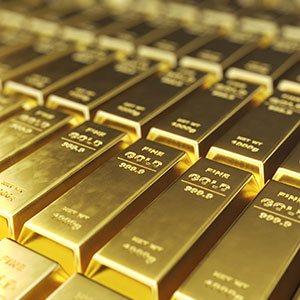
The new 39% U.S. tariff on imports from Switzerland, which went into effect yesterday, also applies to shipments of gold bars, according to a letter that a Customs and Border Protection (CBP) official sent a Swiss company this week.
Gold bullion is currently listed on the CBP’s Annex II, meaning it’s exempt from most tariffs. However, the letter, first reported in the Financial Times, said that one-kilo and 100-ounce gold bars do not fall into that category.
“These bars are cast and have been stamped and needled or lasered with identifying information, and thus have been further processed,” wrote James Forkan, acting director of the CBP’s National Commodity Specialist Division.
While the letter only addresses the company’s specific query, it likely means that any gold bar shipments will be tariffed, and that imports from Switzerland—a refining hub—will be subject to the 39% duty.
“Gold, in its unwrought form, was on the original Annex II exemption list for a reason: to enable the free flow of trade in a critical mineral that is also currency,” says Sara Yood, president and CEO of the Jewelers Vigilance Committee.
“However, that is currently limited to a single harmonized tariff code. If your goods fall outside that code, they will be tariffed at the existing rates. Unfortunately, Customs has ruled that these bars fall outside the exempted tariff code. This will put further stress on the already-in-high-demand reclaimed/reused/recycled gold market in the U.S.”
The FT called the ruling a surprise, noting that the U.S. has never imposed a levy on gold bullion before.
“One-kilo bars are the most common form traded on Comex, the world’s largest gold futures market, and comprise the bulk of Switzerland’s bullion exports to the U.S.,” the newspaper reported.
ASFCMP, the Swiss precious metals association, said in a statement that the “imposition of tariffs on these gold cast products makes it economically unviable to export them to the U.S.”
It added that “while the U.S. market is significant for the Swiss precious metals industry, the latter is active worldwide and not dependent on that single market.”
The news sent the spot price of gold soaring past $3,400 an ounce. At press time, it was trading at $3,396.
UBS precious metals strategist Joni Teves told the FT that the Customs official’s letter “creates an issue for the global gold market, which uses Comex gold futures to hedge positions. It raises the question of whether there may be alternate ways of settling these gold futures contracts, in terms of products or locations, or if other centers become more relevant.”
Stephen Innes, managing partner of SPI Asset Management, wrote on FXStreet that the CBP edict is causing a “firestorm,” since many traders had been buying bullion as a respite from the chaos sparked by the trade war.
“By targeting kilo bars—the format most embedded in U.S. markets and jeweler demand—the administration isn’t just collecting tariffs,” Innes said. “It’s rewriting the international script on what is and isn’t a neutral store of value.
“At a time when central banks are hoarding gold to diversify away from dollar risk, Washington is slapping toll booths on the global metal highway. Switzerland, the middleman in this high-value supply chain, just became collateral damage.… If gold—the most apolitical of assets—gets caught in tariff crossfire, what’s next?”
(Photo: Getty Images)
- Subscribe to the JCK News Daily
- Subscribe to the JCK Special Report
- Follow JCK on Instagram: @jckmagazine
- Follow JCK on X: @jckmagazine
- Follow JCK on Facebook: @jckmagazine