
The Natural Diamond Council (NDC) may soon receive a significant cash injection, thanks to the Luanda Accord—an agreement between six diamond-producing nations, one cutting center, and two gem hubs to fund the promotion of natural diamonds. It was signed June 18 in Angola’s capital city.
Signatories to the agreement include Botswana, Angola, Sierra Leone, Namibia, South Africa, the Democratic Republic of Congo, Antwerp World Diamond Centre, the African Diamond Producers Association, Dubai Multi Commodities Centre, and India’s Gem & Jewellery Export Promotion Council.
All those parties have agreed to contribute 1% of the annual revenue they generate from rough diamonds to the NDC. Individual governments will determine, together with the local industry, how they will collect these funds.
Those mechanisms haven’t all been finalized yet, says the NDC’s CEO, David Kellie. As a result, the NDC is still figuring out its budget for 2026, when most of the contributions will start.
But the group already has received a boost for this year, when incoming revenues will hit $38 million. Its 2025 budget was originally $22 million, but at the Luanda meeting, Angola pledged to contribute $8 million, which was matched by another $8 million from De Beers.
Founded in 2015 as the Diamond Producers Association, the NDC originally received significant funding from De Beers and Russian diamond producer Alrosa, with its budget hitting $84 million in 2021.
That changed with the war in Ukraine, which caused Alrosa to leave the group. As a result, the group’s budget, which was set at $95 million in 2022, sank to $62 million. In 2023, it fell to $54 million, and in 2024, it hit $36 million.
Prior to this agreement, the NDC was funded almost entirely by De Beers, though Okavango Diamond Company, Petra, Gem Diamonds, and RZM Murowa also contributed in 2024.
Missing from the list of contributing nations are the United States and Canada. Canada’s Northwest Territories house three diamond mines, and their owners have contributed to the NDC in the past (De Beers, owner of one of those mines, still does). But most of those deposits are slated for closure in the next few years.
The United States, the world’s largest diamond market, lacks a formal industry body to collect the funds. Some have suggested that the GIA contribute via its lab, but there are “no plans” for that currently, Kellie says.
With its coffers set for a boost, Kellie says that the trade shouldn’t expect traditional TV and print campaigns. Instead, it is targeting Generation Z and millennials, and will focus on streaming services and social media.
The Luanda Accord will change the NDC’s structure, with most of the new contributors joining the board, though countries that kick in $4 million or more will receive “A” voting rights, and those that contribute $1 million or more will get “B” voting rights.
At a June 11 panel held during the World Federation of Diamond Bourses president’s meeting in New York City, Kellie noted that the group’s site, naturaldiamonds.com, contains tons of original content, and advised companies looking to promote natural diamonds on social media to feature its content on their feeds. The NDC recently has put up a new learning hub, the Diamond Learning Center, meant to answer staff and consumer queries.
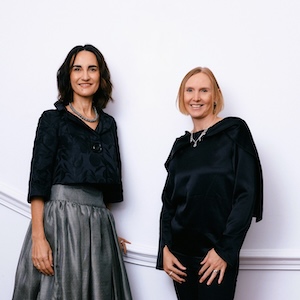
Photo courtesy of the Natural Diamond Council
- Subscribe to the JCK News Daily
- Subscribe to the JCK Special Report
- Follow JCK on Instagram: @jckmagazine
- Follow JCK on X: @jckmagazine
- Follow JCK on Facebook: @jckmagazine